A perforated eardrum may develop after repeated ear infections, injury, sudden pressure changes or improper cleaning of the ear. Small perforations sometimes heal naturally, but a hole that remains open can cause recurrent discharge, reduced hearing and difficulty keeping the ear dry.
A stitchless tympanoplasty operation is a minimally invasive approach used in selected patients to repair the eardrum without a conventional external incision requiring skin sutures.
What Does Tympanoplasty Repair?
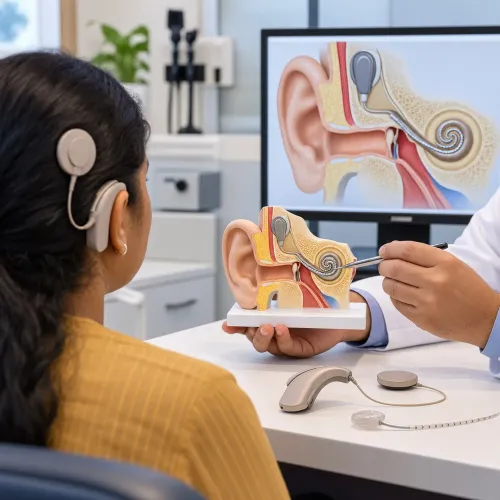
The eardrum receives sound vibrations and passes them to the small hearing bones in the middle ear. A perforation can interfere with this process and allow water or bacteria to enter the middle ear.
Tympanoplasty may be considered when a patient experiences:
- A perforation that has not healed
- Repeated ear discharge
- Conductive hearing loss
- Difficulty participating in water-related activities
- Persistent discomfort or ear blockage
- The need to create a safer, drier middle ear
The operation may repair only the eardrum or address the middle-ear hearing bones when they are also affected. Hearing improvement varies according to the condition of the middle and inner ear.
How Is the Stitchless Technique Different?
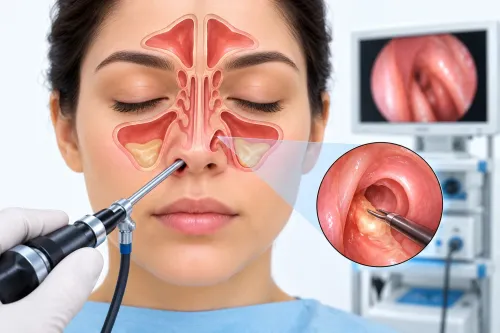
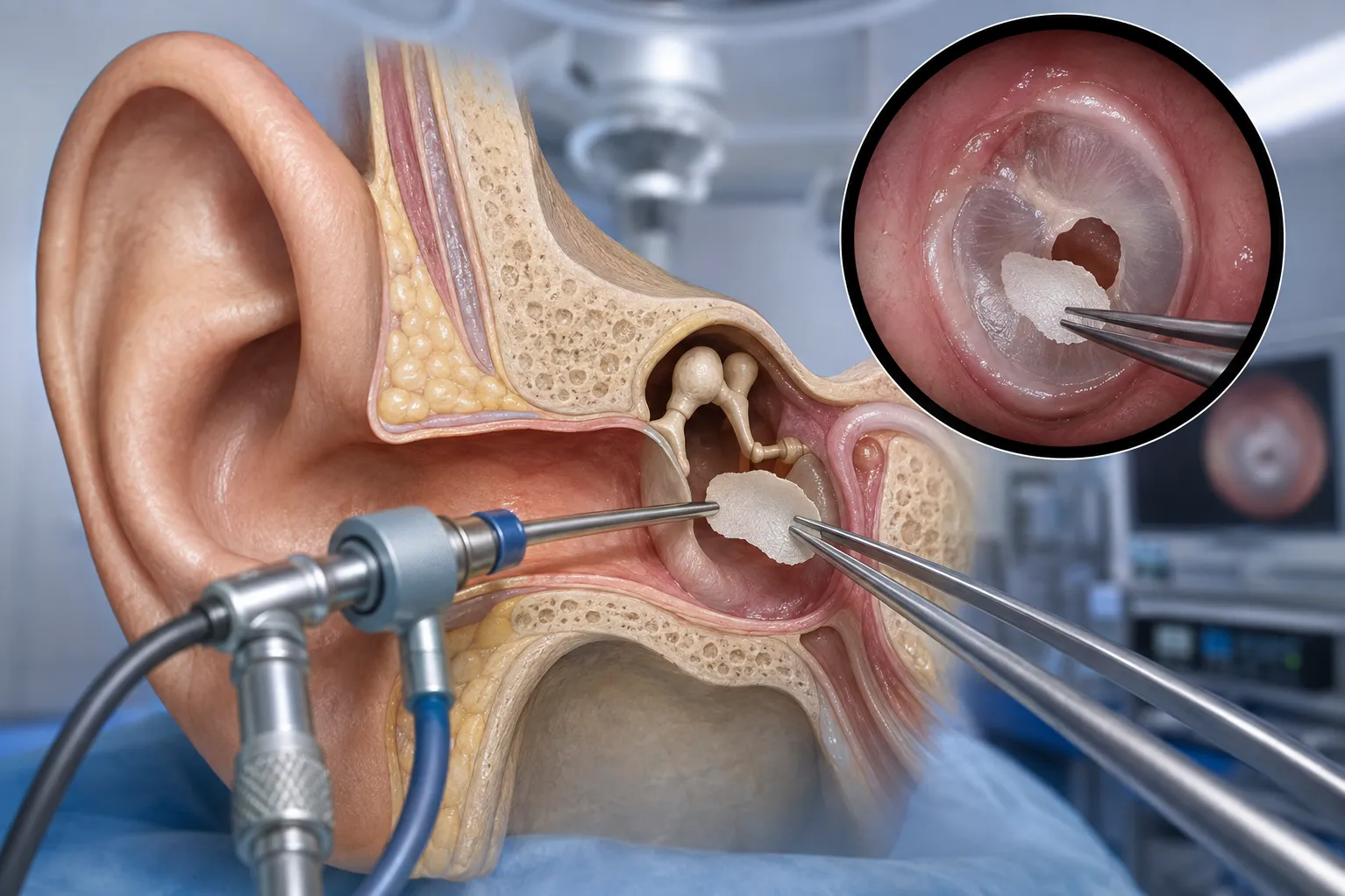
In an endoscopic stitchless approach, the surgeon may access the eardrum through the natural ear canal. A camera provides a magnified view, reducing the need for a larger incision behind the ear in suitable cases.
Tissue or another appropriate graft material is positioned to close the perforation. Because there may be no external skin incision, visible stitches are generally unnecessary.
Potential practical advantages can include:
- No visible external scar
- Less disruption of surrounding tissue
- Magnified endoscopic visualisation
- Shorter dressing requirements
- A potentially more comfortable recovery
These advantages are not guaranteed for every patient. The location and size of the perforation, ear-canal anatomy, active infection, previous surgery and middle-ear disease influence whether a stitchless method is appropriate.
Assessment Before Surgery
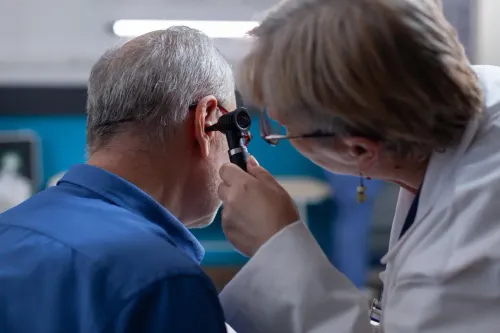
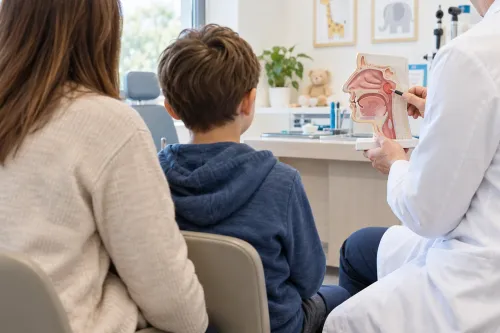
An ENT surgeon normally examines the ear under magnification and checks whether infection is present. Pure-tone audiometry helps measure the type and degree of hearing loss. Tympanometry or imaging may be required in selected cases.
Patients should inform the surgeon about medicines, allergies, diabetes, bleeding disorders and previous ear procedures. Active discharge may need treatment before the operation.
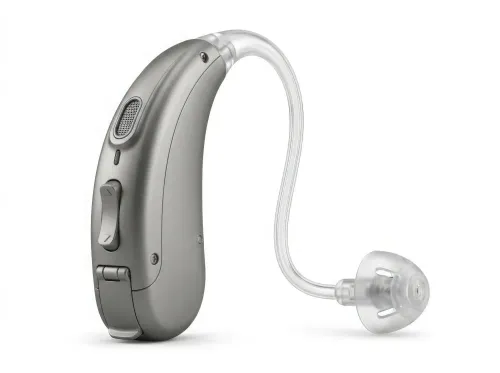
Not every perforation requires immediate surgery. Some recent perforations heal without an operation, while hearing devices may be considered in certain situations. NHS guidance similarly notes that surgery may be required when an eardrum does not heal naturally. Read the clinical overview of perforated eardrums.
Recovery After Tympanoplasty
Patients are generally advised to keep the operated ear dry and avoid inserting earbuds, oil or unprescribed drops. Forceful nose-blowing, strenuous exercise, swimming and air travel may be restricted temporarily.
Mild discomfort, fullness or popping sensations can occur during healing. Hearing may initially seem reduced because of dressings or swelling. The final result is assessed after the graft has healed.
Medical advice should be sought if there is heavy bleeding, increasing pain, fever, facial weakness, severe dizziness or persistent vomiting.
Evaluating Tympanoplasty in Nashik
Patients considering a stitchless tympanoplasty operation in Nashik should ask whether the endoscopic approach suits their specific perforation. The most appropriate technique is the one that provides safe access and a dependable repair, not simply the smallest incision.
At Omkar ENT Hospital, the decision is based on ear examination, hearing-test findings and the condition of the middle ear. Patients also receive instructions about ear protection and follow-up.
A stitchless technique can make eardrum repair less externally invasive for suitable patients, but careful selection and postoperative precautions remain essential to successful healing.
Keywords