Symptoms that persist, return after brief treatment, or interfere with sleep and work deserve more than another unsupervised course of antibiotics. By checking the duration, pattern, warning signs, possible causes, and evidence from examination and imaging, you can decide whether to arrange an ENT assessment and understand why evaluation does not automatically mean surgery.
Key takeaways
- Seek ENT assessment when symptoms last 12 weeks or longer.
- Ask for evaluation if symptoms repeatedly return after temporary improvement.
- Expect medical treatment and objective evidence before surgery is considered.
- Seek urgent care for severe or rapidly worsening symptoms.
Which sinus symptoms justify a specialist assessment?
Symptoms lasting 12 weeks or longer justify an ENT assessment, especially with persistent nasal blockage, facial pressure, reduced smell, thick discharge, or postnasal drip. Recurring symptoms that return after temporary improvement, disrupt sleep or work, or repeatedly require antibiotics also warrant a sinus specialist consultation in Nashik. Evaluation does not commit you to surgery.
| Pattern | What it suggests | What it means |
|---|---|---|
| Symptoms for 12 weeks or longer | Possible chronic rhinosinusitis | Needs nasal endoscopy or CT evidence of inflammation before surgery is considered |
| Four or more distinct attacks in one year, with near-normal periods between them | Recurrent acute sinusitis | Check allergy, dental infection, structural narrowing, and immune problems first |
| Blockage, pressure, or discharge despite saline and appropriate medication | Treatment-resistant disease | Discuss alternatives and surgery only after confirming the diagnosis |
| One-sided blockage, bloody or foul-smelling discharge, facial swelling, or a visible mass | Possible dental disease, foreign body, polyp, or another lesion | Arrange earlier specialist assessment |
The signs sinus surgery needs specialist evaluation in Nashik are warning patterns, not proof that an operation is necessary. Symptoms needing surgery in Nashik may instead come from allergic rhinitis, a deviated septum, enlarged turbinates, migraine, or dental infection.
A specialist should review examination findings, treatment response, expected benefit, bleeding and eye or brain injury risks, anaesthesia, and postoperative care before recommending surgery.
When symptoms point to a different diagnosis
Chronic rhinosinusitis requires symptoms for at least 12 weeks plus objective inflammation on nasal endoscopy or CT. Recurrent acute rhinosinusitis means four or more distinct attacks in a year, with normal or near-normal breathing between attacks. Neither pattern proves surgery is necessary.
| Pattern | Clues that point away from sinus surgery |
|---|---|
| Allergic rhinitis | Itching, sneezing, clear watery discharge, and symptoms linked to dust, pollen, or pets; fever and thick infected drainage are absent. |
| Structural blockage | One-sided, constant obstruction suggests a deviated septum, enlarged turbinate, or polyp rather than repeated infection. |
| Dental disease | One-sided cheek pressure, foul smell, or drainage beside an upper tooth, especially after dental treatment, needs dental assessment. |
| Migraine or neuralgia | Severe facial pain without blockage, drainage, smell loss, or endoscopic inflammation is more consistent with migraine, nerve pain, or tension headache. |
| Other causes | Jaw-joint pain, medication-related congestion, immune problems, or a mass require targeted examination. |
Repeated antibiotic courses do not identify the cause. CT is not routine for a first uncomplicated attack; before surgery, a thin-cut scan must match symptoms and endoscopy because incidental mucosal thickening is common.
Persistent obstruction, reduced smell, facial pressure, thick discharge, or postnasal drip despite appropriate saline and medical treatment justify specialist evaluation. If searching for sinus symptoms needing surgery in Nashik, choose assessment that tests the diagnosis rather than relying only on a CT report or symptom count.
What happens during a sinus surgery evaluation
A sinus surgery evaluation in Nashik starts with confirming the diagnosis, not booking an operation. Chronic rhinosinusitis usually requires symptoms for at least 12 weeks plus objective inflammation seen on nasal endoscopy or a CT scan; symptoms alone do not prove surgery is needed.
- The ENT specialist reviews nasal blockage, facial pressure, thick drainage, postnasal drip, smell loss, sleep disruption, flare-ups, antibiotic courses, allergy symptoms, dental problems, migraine features, and previous treatment.
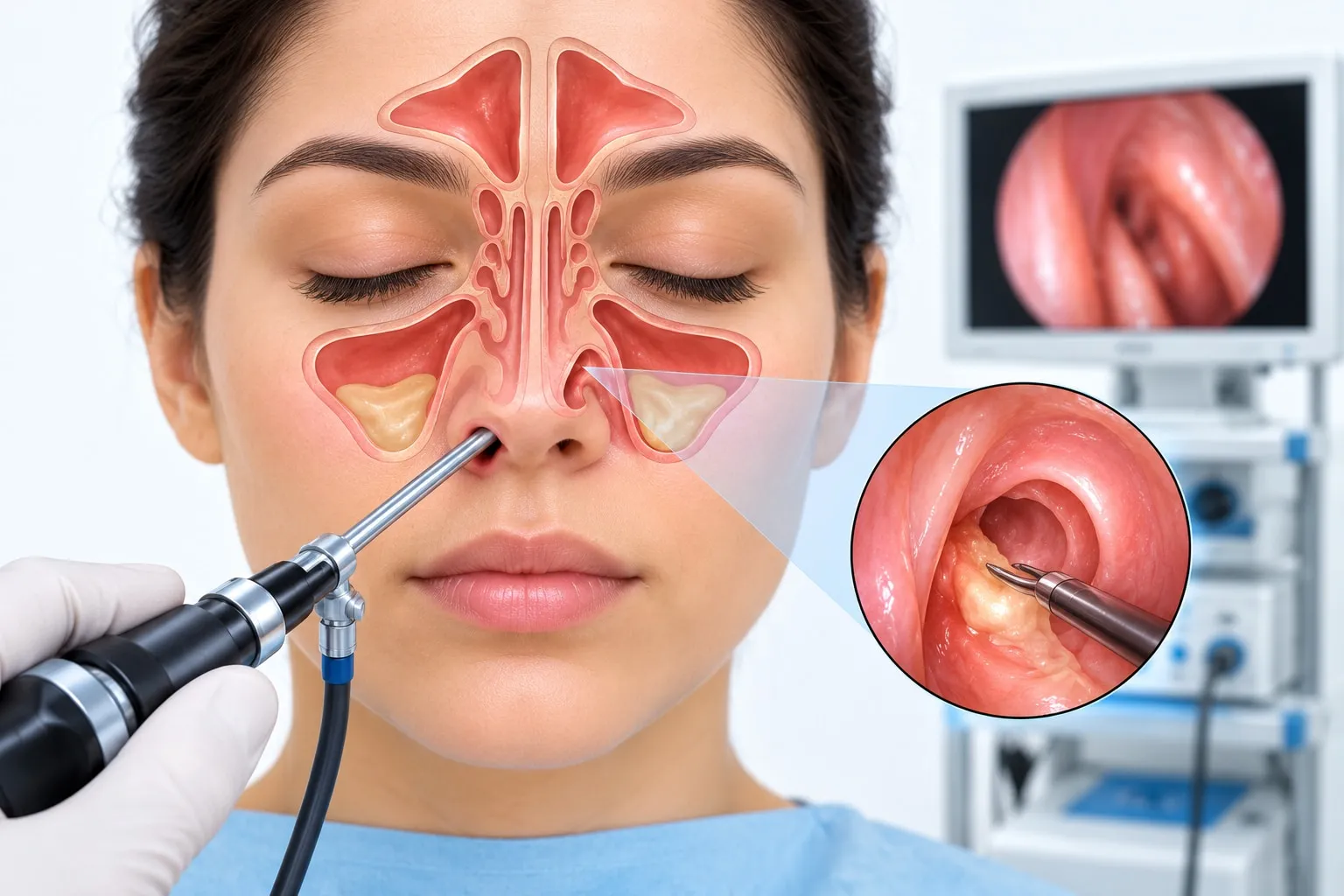
- The specialist examines the nose and throat, checks for a deviated septum, enlarged turbinates, nasal polyps, pus, or another obstruction, and may perform nasal endoscopy with a small camera.
- The consultation tests whether saline irrigation, an intranasal corticosteroid, allergy treatment, or antibiotics for suspected bacterial infection produced adequate improvement.
- If surgery remains possible, ask about the expected benefit, alternatives, anaesthesia, bleeding, eye or brain injury, postoperative cleaning or debridement, and the chance of persistent or recurrent symptoms.
A thin-cut CT of the paranasal sinuses is appropriate when chronic disease is suspected after assessment, or when planning endoscopic sinus surgery. It is not routine for a first uncomplicated acute sinus infection. Mucosal thickening can appear incidentally, so the CT report must match your symptoms and endoscopy findings.
At Omkar ENT Hospital - 08042755812, take prior CT images, reports, medication names, and treatment dates to help the ENT specialist judge whether further medical care or surgery makes sense.
Related service
Nose block and stichless endoscopy sinus operations ₹75000 What is Sinus Surgery? Sinus surgery, also known as endoscopic sinus surgery, is a medical procedure performed to treat chronic sinusitis or other... View service → |
Why medical treatment and objective evidence come first
Surgery is appropriate only when symptoms, examination findings, and treatment response point to a correctable sinus problem. Symptoms lasting 12 weeks or longer support evaluation for chronic rhinosinusitis, but they do not prove that an operation is needed.
For a sinus surgery evaluation in Nashik, the specialist first checks whether appropriate medical treatment has been completed. Persistent blockage, facial pressure, reduced smell, or thick drainage after saline irrigation and a prescribed intranasal corticosteroid deserves closer assessment. Antibiotics apply when bacterial infection is suspected; allergy treatment applies when allergic inflammation is driving symptoms.
Temporary improvement followed by relapse also matters.
- Medication response: Improvement suggests inflammation that may remain manageable without surgery. Ongoing troublesome symptoms despite an appropriate treatment trial make further investigation reasonable.
- Nasal endoscopy: A thin camera can show pus, swollen tissue, nasal polyps, a narrowed drainage pathway, or another cause of blockage. It provides direct evidence inside the nose rather than relying on symptoms alone.
- CT findings: A thin-cut CT can map sinus inflammation, blocked drainage routes, bone anatomy, and disease before endoscopic surgery. Do not use CT routinely for a straightforward first episode of acute sinusitis; incidental lining thickening is common and does not establish surgical disease.
The specialist matches CT findings with endoscopy and symptoms. If facial pain occurs without blockage, drainage, smell loss, or sinus inflammation, migraine, dental disease, or jaw disorders deserve consideration before surgery. Even after surgery, chronic inflammation may require ongoing saline, nasal steroids, allergy care, and follow-up.
When to seek urgent care and how to prepare
Swelling or redness around an eye, double vision, reduced vision, restricted eye movement, confusion, vomiting, neck stiffness, or a severe headache with fever requires urgent medical attention. Rapidly worsening illness also needs same-day assessment, not an elective appointment; orbital or intracranial complications can progress quickly.
| Situation | What to do | Why it matters |
|---|---|---|
| Eye swelling, vision change, confusion, neck stiffness, or rapid deterioration | Seek urgent care now | Possible spread beyond the sinuses |
| One-sided blockage, bloody or foul-smelling discharge, facial swelling, or a visible mass | Arrange an earlier ENT assessment | Dental disease, a foreign body, polyp, or another lesion can mimic sinusitis |
| Symptoms lasting 12 weeks, recurring after brief relief, or repeatedly disrupting sleep and work | Book a sinus specialist consultation in Nashik | Persistent symptoms justify evaluation, not automatic surgery |
Knowing the signs sinus surgery needs specialist evaluation in Nashik helps you seek the right appointment without assuming an operation is necessary. Bring a dated symptom timeline, every medicine and nasal spray you use, antibiotic prescriptions, allergy information, and details of previous improvement or relapse.
Also bring CT images and the radiology report, nasal endoscopy records, and dental reports when relevant. Ask what diagnosis the evidence supports, which alternatives to surgery remain, expected benefit, bleeding and eye or brain injury risks, anaesthesia concerns, postoperative cleaning, and the chance that symptoms will persist or return.
Frequently asked questions
Which sinus symptoms justify a specialist assessment?
Arrange an ENT assessment for symptoms lasting 12 weeks or longer, including nasal blockage, facial pressure, reduced smell, thick discharge, or postnasal drip. Recurring symptoms, sleep or work disruption, and repeated antibiotic use also justify review.
Can persistent sinus symptoms indicate a different diagnosis?
Yes. Symptoms that resemble sinusitis can point to another nasal, ear, throat, allergy, dental, or head-and-neck condition. A specialist assessment helps distinguish these causes before surgery is considered.
What happens during a sinus surgery evaluation?
The specialist reviews your symptom pattern, previous treatments, recurrence, and effect on daily life, then examines your nose and related structures. The evaluation determines whether further objective testing or treatment is needed.
Why do medical treatment and objective evidence come first?
Surgery is not the first step for every sinus complaint. The specialist uses appropriate medical treatment and objective findings to confirm the problem and decide whether surgery offers a reasonable benefit.
When should you seek urgent care for sinus symptoms?
Seek urgent care for severe or rapidly worsening symptoms, particularly when symptoms involve the eye or vision, severe headache, facial swelling, confusion, or serious illness.