Parents need to know whether a child’s symptoms actually come from the adenoids, which tests and treatments are needed, and what surgery involves. By the end, you will know how to prepare for the operation, manage recovery, compare hospitals, and recognise when a second opinion or urgent care is appropriate.
Key takeaways
- Confirm that enlarged or infected adenoids explain your child’s symptoms.
- Ask whether nasal endoscopy or a sleep study is needed before surgery.
- Follow fasting, medication, and illness instructions before the operation.
- Seek review for bleeding, breathing trouble, dehydration, or persistent fever after surgery.
What happens during a child adenoid treatment consultation?
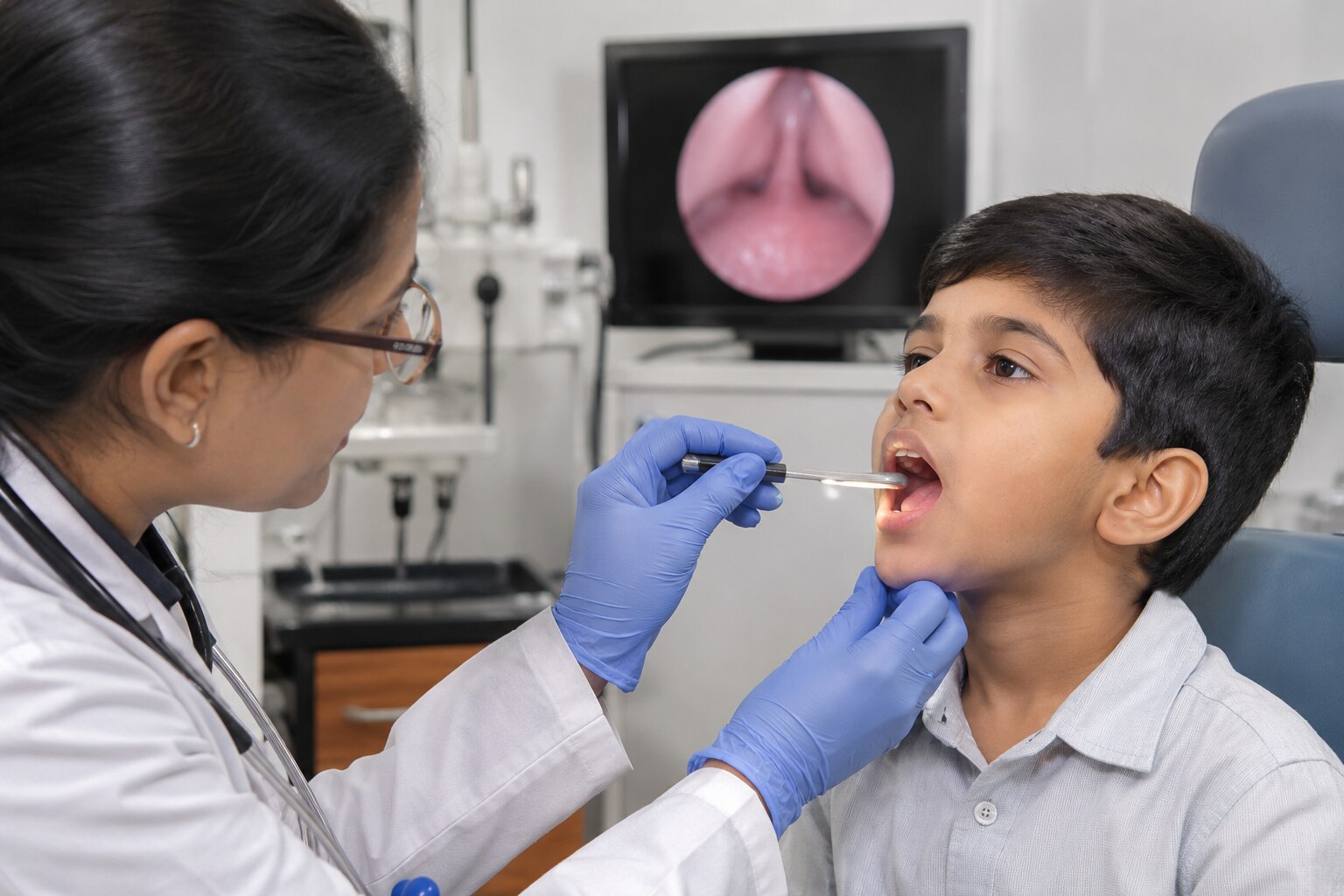
A child adenoid treatment consultation in Nashik should establish whether enlarged or infected adenoids cause the problem before anyone recommends surgery. The doctor records:
- Nasal blockage, mouth breathing, snoring, witnessed pauses or gasping, restless sleep, recurrent infections, feeding, speech, hearing, daytime behaviour and school difficulties
- Ear fluid, repeated ear infections and hearing changes
- Allergies, previous treatments, current medicines, bleeding problems and past reactions to anaesthesia
The examination covers the nose, mouth, throat and ears. The doctor also considers other explanations:
| Cause | Clues the doctor assesses | Possible next step |
|---|---|---|
| Adenoids | Persistent blockage, mouth breathing, snoring, ear fluid | Medical treatment or surgery |
| Tonsils | Large tonsils, throat narrowing, sleep-disordered breathing | Tonsil assessment |
| Allergic rhinitis | Sneezing, itching, clear discharge | Allergy treatment |
| Sinus or structural disease | Ongoing discharge, turbinate or septal problems | Targeted treatment or further assessment |
| Repeated infection | Frequent acute episodes | Infection management |
Mild symptoms may need observation, nasal or allergy treatment, infection treatment or a sleep assessment instead of immediate removal. Surgery is considered more strongly when breathing difficulty, mouth breathing, snoring, suspected obstructive sleep apnoea, or recurrent ear and hearing problems continue.
Ask what finding connects the adenoids to your child’s symptoms and which non-surgical option comes first.
Which tests are useful before deciding on adenoid surgery?
Not every child needs a scan, endoscopy, hearing test or blood test before adenoid surgery. The useful test depends on the symptoms, examination and whether its result will change treatment.
| Test | What it shows | When it is useful |
|---|---|---|
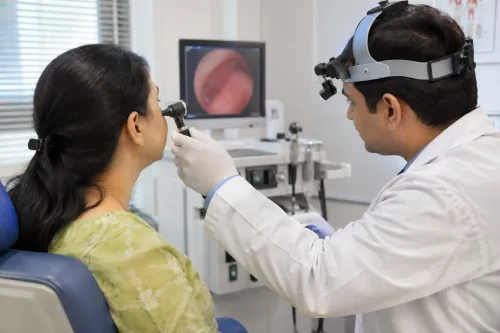
| Flexible nasal endoscopy | Direct view of adenoids and nasal airway | When blockage, adenoid size or a structural problem needs confirmation |
| Lateral neck X-ray | Image suggesting adenoid size | When endoscopy is unavailable or unsuitable, and the result could affect treatment |
| Hearing test and tympanometry | Hearing level and middle-ear fluid | Glue ear, repeated ear disease, delayed speech or hearing difficulty |
| Sleep study | Objective evidence of obstructive sleep apnoea | Uncertain diagnosis, severe symptoms or important risk factors |
| Blood tests | Information relevant to bleeding or anaesthesia | Only when medical history, bleeding history or anaesthesia assessment indicates them |
If testing points to allergy, enlarged tonsils, chronic sinus disease or another cause, allergy treatment, medical care or further assessment may replace immediate surgery. A sleep study can also prevent unnecessary surgery when symptoms do not clearly come from adenoids.
For families reviewing child adenoid treatment inclusions before and after surgery in Nashik, ask which tests are included in the estimate and which are billed separately.
How should you prepare your child for surgery, and what happens on the day?
Good child adenoid surgery preparation starts at booking and continues until a safe discharge plan is clear.
1. Give the surgical team a complete history of allergies, prescription medicines, over-the-counter medicines, supplements, bleeding problems, previous anaesthesia difficulties and current illnesses. Do not stop aspirin, anti-inflammatory medicines or any other drug without specific instructions.
2. Follow the anaesthesia team’s exact fasting directions for solids, milk and clear fluids. Ordinary food or drinks may not be allowed, even if your child feels well.
3. Report a cold, cough, fever or chest infection before arrival. The operation may be postponed when infection increases the anaesthesia or airway risk. Bring identification, medical records, medicine lists, requested reports and a familiar comfort item.
4. Sign consent only after the surgeon explains the operation, alternatives, risks, possible tonsil surgery or ventilation-tube insertion, and aftercare.
5. Arrange transport and an adult who can stay with your child after discharge. Ask about operating and recovery times and whether same-day discharge applies.
Under general anaesthesia, the surgeon removes adenoid tissue through the mouth, without an external neck incision. Many children leave once awake, drinking and free of bleeding or anaesthetic concerns; overnight observation may be advised for age, medical conditions, severe sleep apnoea or hospital policy.
Which removal technique is appropriate, and when should surgery be postponed?
No removal method is automatically best; the appropriate choice depends on how clearly the surgeon can see the adenoid tissue, the child’s anatomy, available equipment and the surgeon’s experience.
| Option | Practical difference | Questions to ask |
|---|---|---|
| Curettage | A surgical instrument removes tissue through the mouth. It is straightforward, but visibility of tissue left behind depends on technique and anatomy. | How will remaining tissue be checked? |
| Powered microdebrider | A powered blade removes tissue in a controlled way under visual guidance when suitable equipment and expertise are available. | How much tissue can be seen and removed? |
| Coblation | Plasma energy works at relatively low temperatures. | What bleeding, pain and recovery should we expect? |
| Laser | Focused light removes or treats tissue; results depend on the device, settings, surgeon and child. | Does it change follow-up or recovery? |
- How well can the surgeon see the tissue, and how much will be removed?
- What bleeding and pain should you expect?
- What equipment is available, and will the technique change recovery or follow-up?
Postpone surgery if symptoms are mild, allergy or another condition explains them, or the child has an untreated infection or anaesthesia concern. An active cold, cough, fever or chest infection can also delay general anaesthesia.
Adenoids can regrow, so removal cannot guarantee that every symptom disappears. Ongoing blockage, snoring or ear disease may instead reflect allergy, enlarged tonsils or turbinates, a septal problem or another sleep-related airway issue.
What should you expect after surgery and during follow-up?
Grogginess, a blocked nose, bad breath, sore throat, ear discomfort, mucus, appetite changes and a low-grade temperature can occur during healing. Nasal-sounding speech and temporarily worse snoring do not automatically mean the operation failed.
| Recovery finding | What it means | What you should do |
|---|---|---|
| Small blood-stained saliva or nasal discharge | Minor healing-related drainage | Monitor and follow discharge instructions |
| Fresh or persistent mouth or nose bleeding | Possible postoperative haemorrhage | Seek urgent medical help |
| Vomiting | Risk of dehydration | Pause solid food; offer small, frequent sips when alert |
Give prescribed pain medicine exactly as directed, offer frequent fluids, and introduce easy-to-eat foods as tolerated. Do not give unapproved medicines. Follow the surgeon’s instructions about school, sports, strenuous activity, travel and swimming, and arrange caregiver time for disrupted sleep.
Seek urgent help for breathing difficulty, repeated vomiting, inability to keep fluids down, dehydration, severe or worsening pain, high fever or unusual drowsiness. During adenoid surgery follow up in Nashik, the ENT review may assess nasal breathing, snoring, sleep, voice, mucus, ear fluid and hearing. Timing depends on age, symptoms, surgical findings and combined procedures.
Report persistent blockage, snoring, nasal speech, food or liquid leaking through the nose, or recurrent ear problems; reassessment can identify regrowth or allergy, tonsils or another cause.
How do you compare an adenoid treatment hospital in Nashik?
Choose an adenoid treatment hospital in Nashik by checking safety, clinical judgement and the full cost—not the advertised removal method alone. Ask whether it offers paediatric ENT assessment, a suitably equipped operating theatre, qualified paediatric anaesthesia support or a named referral arrangement, recovery monitoring and emergency access.
Compare these points before booking:
| Facility feature | What to verify | Why it matters |
|---|---|---|
| Paediatric assessment | ENT examination and child-specific plan | Confirms adenoids explain the symptoms |
| Anaesthesia | Qualified paediatric support or referral | Reduces avoidable anaesthesia risk |
| Aftercare | Written instructions for bleeding, breathing difficulty and dehydration | Tells you when to seek urgent help |
| Follow-up | Timing and checks for breathing, sleep, voice, ears and hearing | Detects persistent or returning problems |
Request an itemised estimate for the ENT consultation, endoscopy or imaging, hearing tests, pre-anaesthesia assessment, surgeon and anaesthesia fees, operating-room charges, medicines, pathology, ear tubes, overnight admission and follow-up visits. Ask what is excluded and whether emergency care costs extra. These details define the child adenoid treatment inclusions before and after surgery in Nashik.
Omkar ENT Hospital - 08042755812 can be one local option; ask its team to document inclusions, exclusions and recovery arrangements. Seek a second opinion if surgery is advised for snoring without examination, alternatives are ignored, or no written emergency plan is provided.
Related services
What are Adenoids? Adenoids are small masses of tissue located at the back of the nasal cavity, behind the nose. View service → |
Coblation tonsillectomy Tonsillitis ₹60000 What is Tonsillitis? Tonsillitis is an inflammation of the tonsils, the small, gland-like structures at the back of the throat. |
Frequently asked questions
What happens during a child adenoid treatment consultation in Nashik?
The ENT doctor reviews symptoms such as blocked nasal breathing, snoring, mouth breathing, recurrent infections, sleep disruption, and hearing concerns. The examination assesses the nose, throat, ears, tonsils, and likely adenoid involvement before discussing medical treatment or surgery.
Which tests are useful before deciding on adenoid surgery?
The doctor may use nasal endoscopy to view the adenoids directly. A lateral neck X-ray can show airway narrowing when endoscopy is unsuitable. A sleep study is relevant when obstructive sleep apnoea is suspected, while hearing tests help when ear fluid or hearing loss is present.
How should you prepare your child for adenoid surgery?
Give the hospital an accurate list of medicines, allergies, and previous anaesthetic problems. Follow the specified fasting instructions, ask which medicines to stop or continue, and tell the team if your child develops fever, cough, vomiting, or another acute illness before surgery.
When should adenoid surgery be postponed?
Postpone the procedure when the child has an acute infection or is medically unfit for anaesthesia until the surgical and anaesthesia teams advise that it is safe. The doctor should also reconsider surgery when symptoms do not match adenoid enlargement or medical treatment has not been assessed.
What should you expect after adenoid surgery and during follow-up?
Expect temporary throat discomfort, nasal congestion, bad breath, voice changes, or a low-grade temperature. Give prescribed pain relief and fluids as directed. Contact the hospital urgently for fresh bleeding, breathing difficulty, inability to drink, dehydration, or persistent high fever. Follow-up checks recovery and whether nasal breathing, sleep, infections, or ear symptoms have improved.
Keywords