Pure-tone thresholds alone do not decide whether you should pursue a cochlear implant assessment. By comparing your unaided and aided hearing results, speech understanding, hearing-aid benefit, medical history and communication needs, you can identify when a referral is sensible and what the evaluation will involve.
Key takeaways
- Severe loss is 71–90 dB HL; profound loss is above 90 dB HL.
- Poor speech understanding despite well-fitted hearing aids supports referral.
- Assessment includes audiometry, speech testing, aided testing, and medical review.
- Children need age-appropriate testing and evidence that hearing supports language development.
Which hearing results usually prompt an implant assessment?
Severe hearing loss is commonly described as 71–90 dB HL and profound loss as greater than 90 dB HL on pure-tone audiometry. These ranges describe hearing level, not automatic approval; classification methods and implant criteria vary by programme.
| Degree and pattern of loss | What it suggests | Why it matters |
|---|---|---|
| Severe, 71–90 dB HL | Substantial difficulty detecting speech | Referral becomes stronger when both ears have sensorineural loss and hearing aids provide poor speech access |
| Profound, above 90 dB HL | Very limited unaided access to sound | Bilateral sensorineural loss is a strong reason to request a full implant evaluation |
| One-ear severe or profound loss | Significant loss on one side | The other ear’s hearing, speech understanding and hearing-aid benefit still influence the decision |
Aided word or sentence recognition is equally important. Many centres give particular attention to very poor aided scores, such as 50% or less, but Nashik has no single local cutoff and no online number guarantees approval.
The team checks whether the loss is permanent and sensorineural, rather than caused by wax, middle-ear fluid, ossicular disease or another treatable conductive problem.
Persistent difficulty understanding speech in quiet, dependence on lip-reading, or missed alarms are reasons to seek testing, not diagnoses. “Hearing loss qualifying for cochlear implant assessment in Nashik” means enough clinical concerns justify a full evaluation; it does not mean surgery has been approved. A one-ear result alone cannot settle that decision.
When does limited hearing-aid benefit justify a referral?
Ask about a cochlear implant referral in Nashik when correctly fitted hearing aids provide little access to speech, aided word or sentence scores remain poor, hearing is progressively worsening, or sudden hearing loss occurs. Sudden loss is a clinical priority requiring prompt ENT review, not a reason to wait for routine implant paperwork.
Before judging benefit, confirm that:
- Each aid matches the audiogram and is functioning properly.
- Programming includes real-ear measurement or another objective verification when available.
- The person wears the aids consistently, in suitable listening situations.
- Aided word or sentence testing measures speech understanding with amplification.
Unaided thresholds cannot replace aided testing. Two people with the same audiogram can understand very different amounts of speech because speech processing, duration of deafness and hearing-aid benefit differ.
Assessment is not a surgery decision.
| Option | What the team may recommend | Why |
|---|---|---|
| Assessment only | More testing and counselling | The evidence is incomplete |
| Non-surgical plan | New programming, continued aids or treatment of middle-ear disease | Hearing access may improve without implantation |
| Alternative or implant | Bone-conduction technology or cochlear implantation | Findings and goals support another route |
Adults with long-standing deafness are not excluded by age alone. Duration of deafness, earlier sound and language exposure, hearing-aid history, communication method and realistic expectations shape the recommendation. Ask for assessment when benefit remains poor after verification; referral gathers evidence, not a promise of surgery.
What tests are included in the Nashik assessment pathway?
A complete assessment usually moves from ear examination to behavioural hearing tests, hearing-aid verification, functional speech testing and, when needed, electrophysiology or imaging. The exact protocol follows the ENT or implant centre’s clinical judgement.
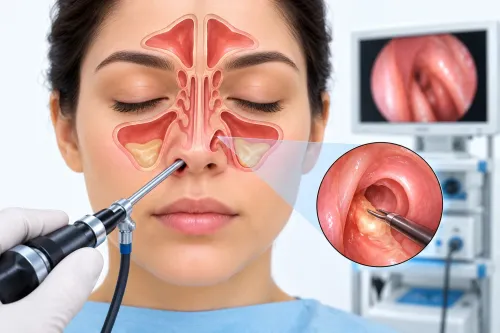
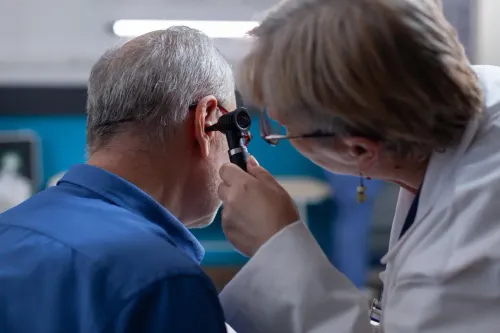
1. An ENT specialist examines the ears and performs otoscopy to identify wax, infection, fluid, eardrum disease or other treatable causes. Audiology then measures pure-tone air- and bone-conduction thresholds, speech audiometry and tympanometry.
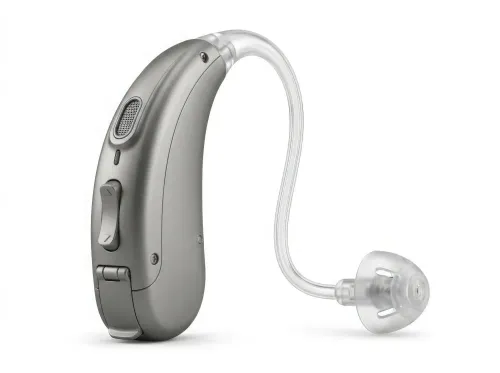
2. The team inspects each hearing aid, checks its function, programmes it to match the audiogram and verifies the output with real-ear or another objective method when available. Aided word or sentence testing shows how much speech you understand through amplification.
3. Otoacoustic emissions or auditory brainstem response may be requested for infants, very young children or anyone unable to provide reliable behavioural responses. ABR supports threshold estimation; it does not replace a complete implant work-up when dependable behavioural and aided results are available.
4. Assessment also includes speech-language evaluation, communication history, cause and duration of deafness, previous hearing-aid use, general medical history and counselling about expectations, mapping and rehabilitation.
5. CT of the temporal bones or MRI of the inner ear and auditory nerve may be coordinated when the team needs to check anatomy, cochlear patency or nerve development.
“Cochlear implant assessment conditions in Nashik” are set by the ENT or implant centre under applicable Indian programme, device and funding rules—not by a separate Nashik audiogram cutoff.
How do the criteria differ for children and adults?
Infants and young children should not wait until they begin speaking. Early diagnostic testing, hearing-aid fitting, aided testing and speech-language assessment protect a time-sensitive period for auditory and language development; prolonged lack of sound access can limit later progress.
| Age group | Assessment focus | What influences referral |
|---|---|---|
| Children | Functional speech access, listening progress, family communication choices, developmental history and rehabilitation capacity | Severe or profound thresholds alone do not establish implantation when well-fitted aids provide useful access. Poor aided speech access can support referral even when the audiogram is not labelled “profound.” |
| Adults | Prior language and sound exposure, hearing-aid history, duration and cause of deafness, communication goals and realistic expectations | Poor functional benefit from correctly fitted aids matters more than age. Long-standing deafness does not automatically exclude assessment, but outcomes depend on more than age. |
A child’s evaluation is therefore broader than an audiogram. The team considers whether hearing aids provide usable speech access and whether the family can support listening practice, speech-language therapy and education. This is central to a profound hearing loss implant evaluation in Nashik.
For adults who lost hearing after developing spoken language, previous auditory experience can support rehabilitation, but long deafness, limited hearing-aid use or a different communication method can affect expectations. Counselling must cover delayed activation, repeated mapping and auditory rehabilitation after surgery. Children also need continuing speech-language and educational support.
What should you confirm before choosing an implant referral?
Choose a clinic that can document the evidence an implant team needs, not one that only quotes an audiogram threshold. For profound hearing loss implant evaluation in Nashik, confirm the full pathway before booking a referral.
Ask the clinic:
- Does it perform paediatric and adult aided speech testing?
- Does it record hearing-aid verification, including programming checks?
- Can it coordinate CT of the temporal bones or MRI of the inner ear and auditory nerve?
- Does it provide counselling about expectations, activation and rehabilitation?
- Who arranges mapping after activation?
- Who provides or coordinates auditory rehabilitation, speech-language support and educational guidance for children?
Ask which documents will accompany a cochlear implant referral in Nashik:
- Recent air- and bone-conduction audiograms, tympanometry and aided speech scores
- Hearing-aid make, settings, verification results and wearing history
- ENT and medical records, previous treatments and prior CT or MRI images
Public-funding forms and device-eligibility paperwork are separate from the medical decision. Ask who completes each form, who obtains signatures and which documents you must supply.
| Assessment result | What it means | Possible next step |
|---|---|---|
| Optimised hearing aids | Benefit was limited by fitting or use | Continue amplification and retest |
| Treatable ear condition | Wax, fluid or middle-ear disease affects results | Treat the condition first |
| Another hearing technology | A bone-conduction option may fit the findings | Discuss that pathway |
| Implant recommendation | Evidence supports further surgical planning | Complete centre-specific evaluation |
Omkar ENT Hospital - 08042755812 is one Nashik ENT option for starting the examination and referral discussion; confirm which pathway services it provides or coordinates. A referral gathers evidence; it does not promise cochlear implant surgery.
Related service
ear hearing issue by birth and in adulthood ₹700000 What is a Cochlear Implant? A cochlear implant is a small, complex electronic device that can help provide a sense of sound to individuals with... View service → |
Frequently asked questions
Which hearing results usually prompt a cochlear implant assessment?
Severe hearing loss at 71–90 dB HL and profound loss above 90 dB HL commonly prompt assessment, but pure-tone results alone do not determine eligibility.
When does limited hearing-aid benefit justify a referral?
Referral is appropriate when correctly fitted hearing aids provide limited speech understanding, poor access to everyday sounds, or insufficient benefit for communication goals.
What tests are included in a cochlear implant assessment pathway in Nashik?
The pathway commonly includes pure-tone audiometry, speech audiometry, aided hearing tests, middle-ear assessment, hearing-aid verification, and a medical review. The team may add imaging and other tests when needed.
How do cochlear implant criteria differ for children and adults?
Children are assessed for hearing access, speech and language development, hearing-aid use, and family support. Adults are assessed mainly through hearing thresholds, aided speech understanding, communication needs, and medical suitability.
What should you confirm before choosing a cochlear implant referral?
Confirm that recent hearing tests are available, hearing aids were fitted and used correctly, speech testing was completed, and the referral centre explains costs, surgery, rehabilitation, and follow-up.