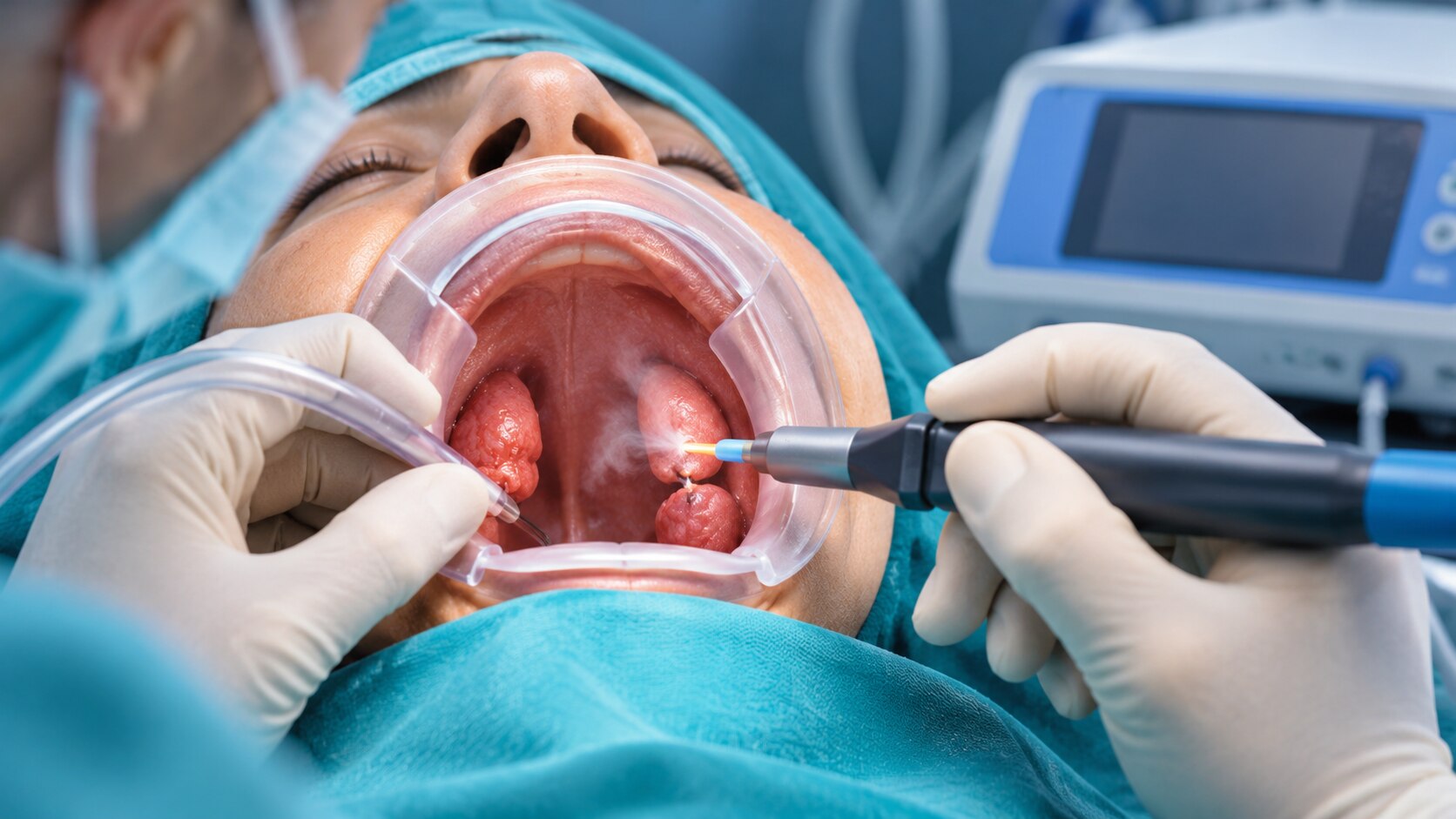
Choosing a nearby tonsil surgery facility involves more than finding a clinic that lists coblation: you need a confirmed medical reason for surgery, appropriate anaesthesia and postoperative support. You will be able to compare treatment methods, judge whether surgery is justified, prepare for consultation and request a written Nashik cost estimate without relying on an incomplete package price.
Key takeaways
- Ask whether the quoted price includes anaesthesia, operating-room fees, medicines, and follow-up.
- Discuss surgery for repeated infections, obstructive enlarged tonsils, or sleep-related breathing problems.
- Plan for throat pain, soft foods, hydration, and bleeding precautions during the first two weeks.
- Confirm hospital accreditation, surgeon experience, emergency access, and the written treatment estimate.
How coblation tonsillectomy differs from other surgical methods
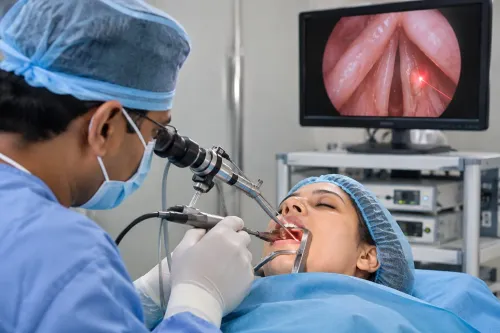
Coblation tonsillectomy uses a wand that delivers radiofrequency energy through conductive saline. The saline forms a controlled plasma field that breaks down and removes tonsil tissue at relatively low temperatures compared with tissue-cutting cautery. Under general anaesthesia, the surgeon removes both tonsils through the mouth and controls bleeding before recovery.
| Method | What happens during surgery | Practical comparison |
|---|---|---|
| Coblation | Radiofrequency energy in saline breaks down tissue | Ask about pain duration, bleeding risk, operative time and normal eating |
| Cold steel | Instruments mechanically dissect and remove the tonsils | Bleeding is controlled separately with pressure, ties or another method |
| Monopolar or bipolar cautery | Electrical heat cuts tissue or seals blood vessels | Heat-related tissue injury and recovery vary with technique |
| Laser | Focused light energy cuts or vaporises tissue | Equipment and tissue effects differ; it is not automatically painless |
Coblation is a technique, not a reason for surgery. The indication still needs to be recurrent documented infection, airway obstruction or another accepted problem. A search for coblation tonsillectomy near me in Nashik should not end with proximity alone.
No method is painless or risk-free. Comparative studies report different results for pain, bleeding, operative time and recovery, but findings vary by surgeon, patient and technique. Ask for measurable estimates: expected throat-pain duration, time away from school or work, bleeding risk, when normal eating should resume and what emergency plan applies.
When enlarged or repeatedly infected tonsils justify surgery
Seven clinically significant tonsil infections in one year is a strong reason to discuss tonsillectomy, but occasional sore throats are not. The episodes should be clinically documented, treated when appropriate, and disruptive enough to affect school, work, sleep, or normal activities.
Use this decision checklist:
1. Consider surgery when records show at least seven qualifying episodes in one year, at least five episodes each year for two consecutive years, or at least three episodes each year for three consecutive years. A vague history of frequent throat pain does not establish the threshold.
2. Seek an ENT assessment when enlarged tonsils cause difficulty swallowing, blocked breathing, sleep-disordered breathing, or confirmed obstructive sleep apnoea. Snoring alone does not prove sleep apnoea; evaluation may include sleep history, throat examination, and a sleep study.
3. Discuss surgery after a previous peritonsillar abscess, or when persistent tonsil stones cause substantial symptoms such as foul breath, pain, bleeding, or repeated cleaning problems.
4. Choose antibiotics and observation for infrequent, uncomplicated infections that do not significantly disrupt daily life. Coblation describes the removal technique, not the medical reason for operating.
5. Request a second opinion when the records are incomplete, symptoms are mild, or the expected benefit is unclear.
For children, age, weight, infection records, obstructive symptoms, and anaesthesia risk change the recommendation. Ask whether overnight monitoring is needed; do not assume same-day discharge is appropriate for every child.
What to expect from a coblation tonsil surgery consultation in Nashik
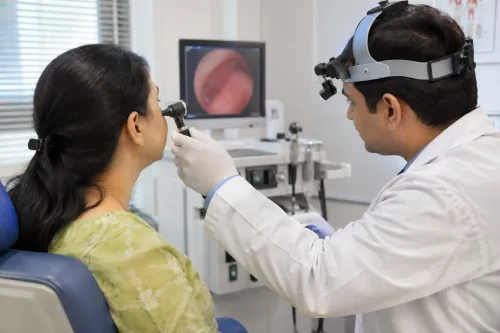
A coblation tonsil surgery consultation in Nashik should confirm the reason for surgery, not just the preferred device. The ENT specialist will inspect your tonsils and throat, review the dates and treatment of previous infections, and ask about snoring, breathing pauses, restless sleep and daytime sleepiness.
They will also check for enlarged adenoids or another airway problem.
1. Bring a complete list of prescription medicines, aspirin, ibuprofen and other anti-inflammatory drugs, anticoagulants, antiplatelet medicines, supplements and allergies.
2. Report any bleeding disorder, unusual bleeding after dental work or surgery, anaesthesia reaction in you or your family, asthma, heart disease, diabetes or sleep-apnoea symptoms. These details affect medication instructions, anaesthesia and bleeding precautions.
3. Ask about expected throat-pain duration, time away from school or work, bleeding risk, recovery, alternatives and the warning signs requiring urgent care. Active throat infection, dehydration, uncontrolled illness or increased bleeding risk can delay surgery.
4. Pre-anaesthesia assessment may include a blood count, coagulation tests when your history or examination indicates them, and other tests based on your age and illnesses. There is no single blood-test list for every patient.
Ask whether you need a sleep study, adenoid assessment, paediatric review or second opinion. Omkar ENT Hospital - 08042755812 can be one facility to contact in Nashik; verify its ENT surgeon, operating theatre, anaesthesia team, postoperative observation and 24-hour plan for bleeding after discharge before booking.
Related service
Coblation tonsillectomy Tonsillitis ₹60000 What is Tonsillitis? Tonsillitis is an inflammation of the tonsils, the small, gland-like structures at the back of the throat. |
What happens on operation day and during the first two weeks
Your facility’s written fasting sheet controls what you eat and drink before surgery. It commonly bans solid food for a specified period and limits clear fluids according to the anaesthetist’s instructions, so do not guess the timing.
After consent and pre-anaesthesia checks, general anaesthesia keeps you asleep while the surgeon removes both tonsils through your mouth using the coblation instrument. The operation is usually shorter than your total stay.
| Day-care discharge | Overnight observation |
|---|---|
| Preparation, surgery and recovery-room monitoring completed | Same process, followed by monitored admission |
| Adequate alertness, pain control and drinking | Extra observation for higher risk or uncertain recovery |
| Suitable when the team considers bleeding, dehydration and anaesthesia risks low | Considered for young children, severe sleep apnoea, higher bleeding or anaesthesia risk, difficult access to emergency care, or concerning operative findings |
Children are not automatically suitable for same-day discharge. Ask who will manage delayed bleeding after you go home, because it can occur several days after surgery.
Throat pain can intensify several days after the operation. Plan about 10 to 14 days away from school or work, adjusted for your age, occupation and surgeon’s advice.
Before leaving, obtain written instructions covering fluids, prescribed pain medicines, diet, activity limits, review timing and a 24-hour contact route. Fresh blood from your mouth or throat is an emergency warning sign: do not wait for review; use the named emergency facility or contact route immediately.
How to compare the coblation tonsillectomy price in Nashik
Do not accept a headline package as the coblation tonsillectomy price in Nashik. Request a written, itemised estimate before booking, because the final bill can change with admission length, room choice and added procedures.
Ask the hospital to show:
- Surgeon’s fee, anaesthetist’s fee, operating-room charge and coblation wand or other disposable consumables
- Room category, medicines, investigations, pathology, postoperative observation and follow-up visits
- Whether adenoidectomy or another procedure is included or billed separately
- Planned admission duration and the charge if an overnight stay becomes necessary
- Financial responsibility if secondary bleeding requires emergency treatment, readmission, a return to theatre or additional medicines
Ask the insurer or hospital separately about pre-authorisation, cashless eligibility, network status, co-pay, room-rent limits, disease-specific exclusions and reimbursement documents. These items can sit outside a package.
Compare a tonsil surgery hospital near me on care as well as price:
| Facility | What to compare | Why it matters |
|---|---|---|
| Hospital A | ENT surgeon, anaesthesia coverage and monitoring | Device cost alone does not establish safe care |
| Hospital B | Emergency access and delayed-bleeding response | Bleeding can occur several days after discharge |
| Hospital C | Follow-up plan and included reviews | Unclear aftercare can create unexpected costs |
Ask who manages bleeding after discharge, where you must go and whether emergency costs are covered. A nearby facility that cannot answer those questions has not been adequately assessed by proximity alone.
Frequently asked questions
How does coblation tonsillectomy differ from other tonsil surgery methods?
Coblation uses radiofrequency energy with conductive saline to create a plasma field that removes tonsil tissue at a lower temperature than tissue-cutting cautery. Your surgeon can explain how it compares with cold dissection, monopolar cautery, bipolar cautery, or partial tonsil removal for your case.
When do enlarged or repeatedly infected tonsils justify surgery?
An ENT specialist may recommend surgery when enlarged tonsils obstruct breathing or swallowing, contribute to sleep-related breathing problems, or cause repeated infections that meet clinical thresholds. The decision depends on documented episodes, examination findings, complications, and response to medical treatment.
What happens during a coblation tonsil surgery consultation in Nashik?
The consultation includes a symptom history, throat and airway examination, review of infection records or sleep symptoms, discussion of anaesthesia and bleeding risk, and a written plan covering preparation, recovery, follow-up, and fees.
What should you expect on operation day and during the first two weeks?
The procedure is performed through the mouth under general anaesthesia, followed by recovery-room observation. Expect throat pain, difficulty swallowing, a gradual return to soft foods, prescribed medicines, and activity restrictions. Seek urgent medical care for fresh bleeding, breathing difficulty, dehydration, or uncontrolled pain.
How should you compare coblation tonsillectomy prices in Nashik?
Compare written estimates that identify the surgeon, hospital or operating-room fee, anaesthesia, tests, medicines, recovery-room care, follow-up visits, and charges for complications or readmission. Ask whether the price covers both tonsils and which services remain separate.
Keywords