Nasal polyps are soft, noncancerous swellings that develop in the lining of the nose or sinuses. Small polyps may cause few problems, while larger or multiple polyps can obstruct airflow, reduce the sense of smell and contribute to recurring sinus symptoms.
Sinus and polyps surgery may be discussed when appropriate medical treatment has not provided adequate control or when disease significantly affects breathing and daily life.
Symptoms Commonly Associated With Nasal Polyps
Patients may experience:
- Long-standing nasal blockage
- Reduced or absent sense of smell
- Facial pressure
- Recurrent sinus infections
- Postnasal drainage
- Mouth breathing
- Snoring
- Thick nasal discharge
- A feeling of congestion that repeatedly returns
Polyps are often associated with chronic inflammation. Asthma, sensitivity to certain pain medicines, allergies and some underlying medical conditions may influence their development.
Treatment Usually Begins Without Surgery
Surgery is not automatically the first treatment. An ENT specialist may initially recommend saline rinses, nasal steroid sprays, short courses of oral medication or treatment for associated allergy and asthma.
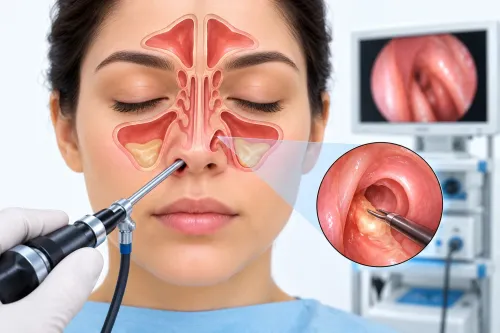
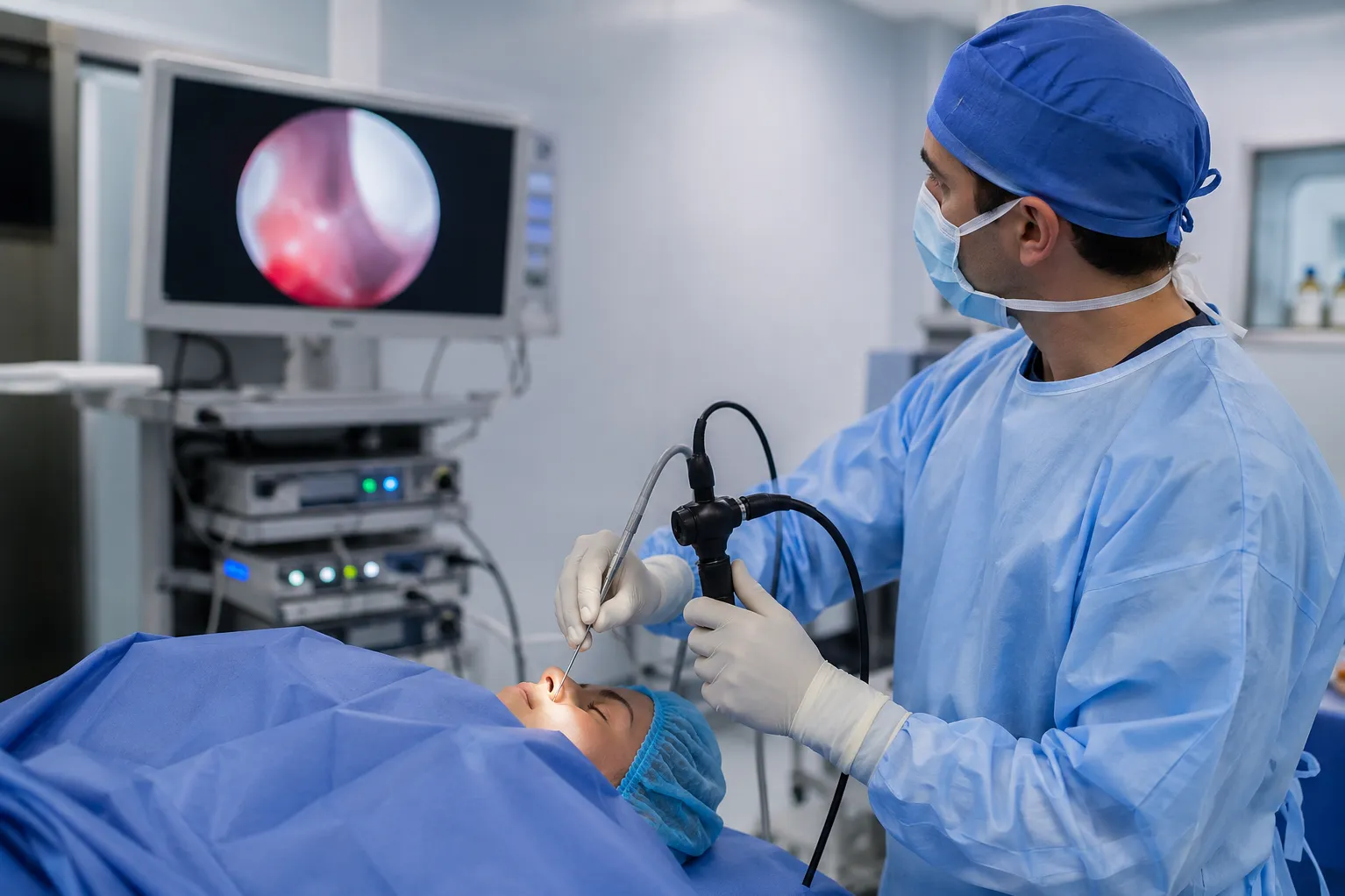
A nasal endoscopy allows the specialist to inspect the nasal passages. CT imaging may then show which sinuses are blocked and reveal anatomical narrowing, retained secretions or extensive polyp disease.
Surgery is more likely to be considered when:
- Symptoms continue despite appropriate medicines
- Polyps repeatedly return
- Sinus infections are frequent
- Smell loss remains significant
- Disease causes substantial nasal obstruction
- A complication or unusual growth is suspected
What Happens During Endoscopic Surgery?
Functional endoscopic sinus surgery is performed through the nostrils, so an external facial incision is generally unnecessary. The surgeon uses an endoscope and specialised instruments to remove polyps and widen blocked sinus drainage pathways.
The aim is to restore ventilation, improve drainage and enable topical medicines to reach the sinus lining more effectively. Surgery treats obstruction and removes diseased tissue, but it does not permanently eliminate a person’s tendency to develop inflammation.
Tissue removed during the procedure may be sent for laboratory examination. This is particularly relevant when a polyp appears unusual, occurs only on one side or is associated with bleeding.
Expectations After Surgery
Temporary congestion, mild blood-stained discharge and nasal crusting can occur during early recovery. Follow-up cleaning may be required while the sinus lining heals.
Patients commonly receive instructions about:
- Saline nasal irrigation
- Prescribed nasal sprays
- Avoiding forceful nose-blowing
- Limiting heavy physical activity
- Attending scheduled endoscopic reviews
- Managing allergies or asthma
Long-term maintenance matters because polyps can recur. Continued nasal medication may be recommended even when breathing improves after surgery.
Questions to Ask Before Proceeding
Before sinus and polyps surgery, patients should understand:
- Which sinuses are affected?
- Has adequate medical treatment been attempted?
- What improvement is realistically expected?
- Could the polyps return?
- What postoperative care will be required?
- Are there risks involving the eye or structures near the skull base?
Although serious complications are uncommon, sinus surgery takes place near the eyes, optic nerves, major blood vessels and brain lining. Surgeon experience, imaging review and suitable equipment are therefore important.
Patients in Nashik may also need to account for local dust, pollution, seasonal allergens and dry conditions that aggravate nasal symptoms. These triggers should be managed as part of ongoing care.
Omkar ENT Hospital assesses sinus disease using symptom history, endoscopic examination and imaging when indicated. Surgery is recommended only when findings and treatment response support it.
The best results come from viewing surgery as one part of chronic sinus care. Correct diagnosis, technically appropriate treatment and consistent postoperative maintenance all influence long-term symptom control.
Keywords