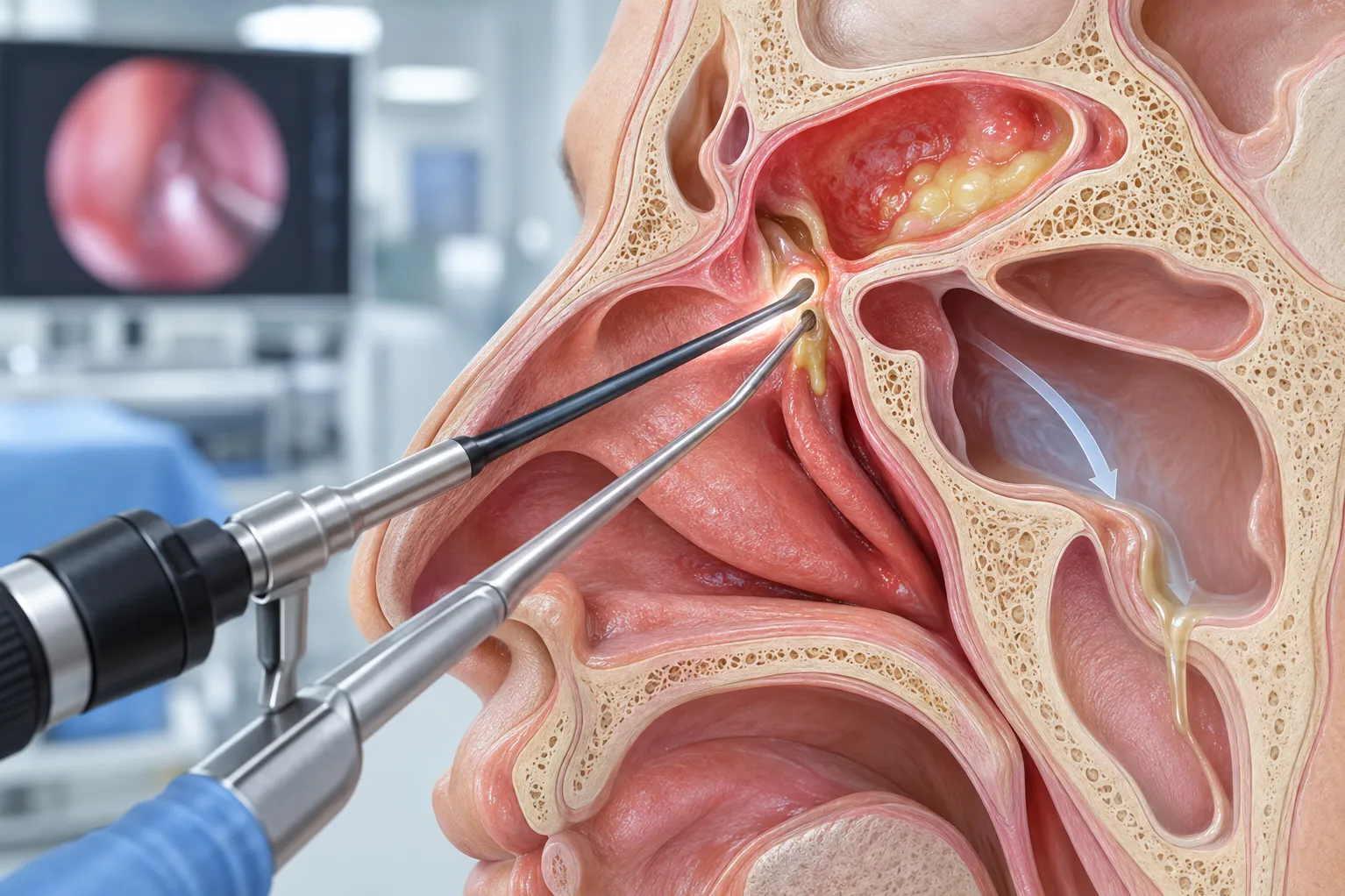
A sinus infection that lasts a few days during a cold is different from chronic sinus disease. When nasal obstruction, facial pressure, thick drainage or reduced smell continue for weeks, repeated short courses of medication may not address the complete problem.
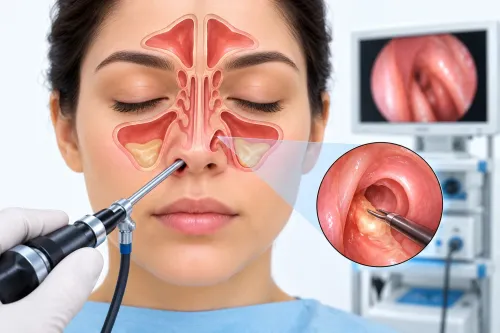
Endoscopic sinus infection treatment allows an ENT specialist to examine the nasal passages directly and plan care according to the cause of persistent symptoms.
Acute Infection Compared With Chronic Sinusitis
Acute sinusitis usually follows a viral upper-respiratory infection. Symptoms often improve with supportive care, although selected bacterial infections may require prescription treatment.
Chronic rhinosinusitis involves inflammation lasting at least several weeks and often includes:
- Ongoing nasal blockage
- Thick nasal or postnasal discharge
- Facial pressure
- Reduced sense of smell
- Recurrent flare-ups
- Persistent cough, particularly in children
- Fatigue or disturbed sleep
Not every headache is caused by sinus disease. Migraine, dental problems, neuralgia and eye strain can produce similar discomfort, which is why examination matters.
What Endoscopy Shows
Nasal endoscopy uses a thin illuminated instrument to examine areas that cannot be seen during a routine external examination. It can reveal swelling, pus, polyps, crusting, anatomical narrowing or an unusual growth.
The findings help determine whether the patient needs:
- Saline nasal irrigation
- Topical nasal medication
- Allergy management
- Antibiotics for an appropriate indication
- Treatment of fungal disease
- CT imaging
- Endoscopic sinus surgery
A sample may occasionally be collected for culture when infection is persistent, unusual or resistant to previous treatment.
When Surgery Enters the Discussion
Endoscopic sinus surgery may be considered when chronic disease remains troublesome despite suitable medical management. Surgery is not a substitute for every sinus medication. Its purpose is to open obstructed drainage pathways, remove selected diseased tissue and improve access for postoperative topical treatment.
Readiness indicators may include:
- Symptoms that substantially affect sleep or daily activity
- Objective disease seen on endoscopy or CT
- Recurrent infections with documented sinus involvement
- Nasal polyps or structural obstruction
- Failure of an adequate medical-treatment plan
- Complications affecting nearby structures
The decision should combine symptoms with examination and imaging rather than rely on a CT report alone.
Avoiding Common Treatment Mistakes
Patients with repeated sinus symptoms should avoid several common mistakes:
- Taking antibiotics without an examination
- Using decongestant nasal drops continuously
- Assuming every facial headache is sinusitis
- Stopping prescribed nasal spray after a few days
- Using unclean water for nasal rinsing
- Ignoring dental disease or uncontrolled allergy
- Delaying care for eye swelling or altered vision
Sterile, distilled or appropriately boiled and cooled water should be used for nasal irrigation according to medical instructions.
When Symptoms Need Urgent Attention
Seek prompt care for swelling around the eye, reduced vision, severe one-sided headache, confusion, neck stiffness, high fever or rapidly worsening facial swelling. These symptoms are uncommon but may indicate a complication.
In Nashik, seasonal allergy, dust exposure, construction activity and changing weather can aggravate nasal inflammation. Reducing exposure and maintaining prescribed treatment may lower the frequency of flare-ups.
Omkar ENT Hospital provides endoscopic evaluation for recurrent and chronic sinus symptoms. Treatment is selected after distinguishing infection from allergy, polyps, structural blockage and other possible causes.
Endoscopic care is most effective when it supports an accurate diagnosis. For some patients that means targeted medication; for others, it means surgery followed by consistent long-term nasal care.
Keywords