Salivary glands produce saliva that keeps the mouth moist and supports chewing, swallowing and oral health. Disease can affect the major glands near the ears, under the jaw or beneath the tongue, as well as smaller glands throughout the mouth and throat.
Salivary gland surgery may be required for persistent stones, recurrent infection, cysts or tumours, but the correct treatment depends on the gland and underlying cause.
Recognising Salivary Gland Problems
A blocked salivary duct often causes swelling and pain during meals because saliva cannot drain normally. The symptoms may reduce after eating and return during the next meal.
Other presentations include:
- Repeated swelling under the jaw
- Painful episodes associated with food
- Dry mouth
- Pus or an unpleasant taste
- A persistent painless lump
- Fever during an acute infection
- Swelling in the floor of the mouth
- Difficulty swallowing
A hard lump, rapid growth, facial weakness or an unexplained persistent swelling should receive prompt specialist assessment.
Diagnosis Comes Before Treatment
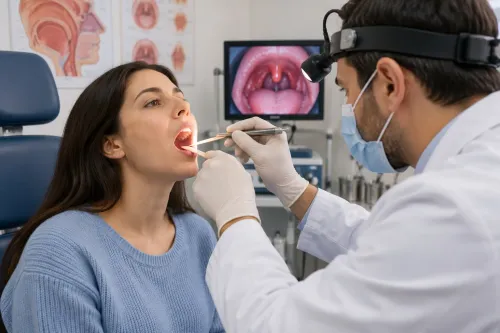
The surgeon examines the affected gland and duct opening. Ultrasound can identify many stones, cysts and superficial masses. CT or MRI may be needed when disease is deep, extensive or suspicious.
Fine-needle aspiration may be recommended for a persistent tumour-like swelling. Blood tests can help when infection, dehydration or an autoimmune condition is suspected.
Treatment for a stone differs from treatment for a tumour. Antibiotics may be needed for bacterial infection, but repeated antibiotic courses will not correct an obstructing stone or persistent structural problem.
When Can the Gland Be Preserved?
Small stones close to a duct opening can sometimes be removed through the mouth. Selected stones may be managed with minimally invasive duct procedures. Hydration, massage and measures that stimulate saliva may help mild obstruction, but patients should seek advice before attempting home treatment.
Gland-preserving treatment may be possible when:
- The obstruction is accessible
- The gland still functions
- There is no suspicious tumour
- Infection can be controlled
- The anatomy permits safe duct treatment
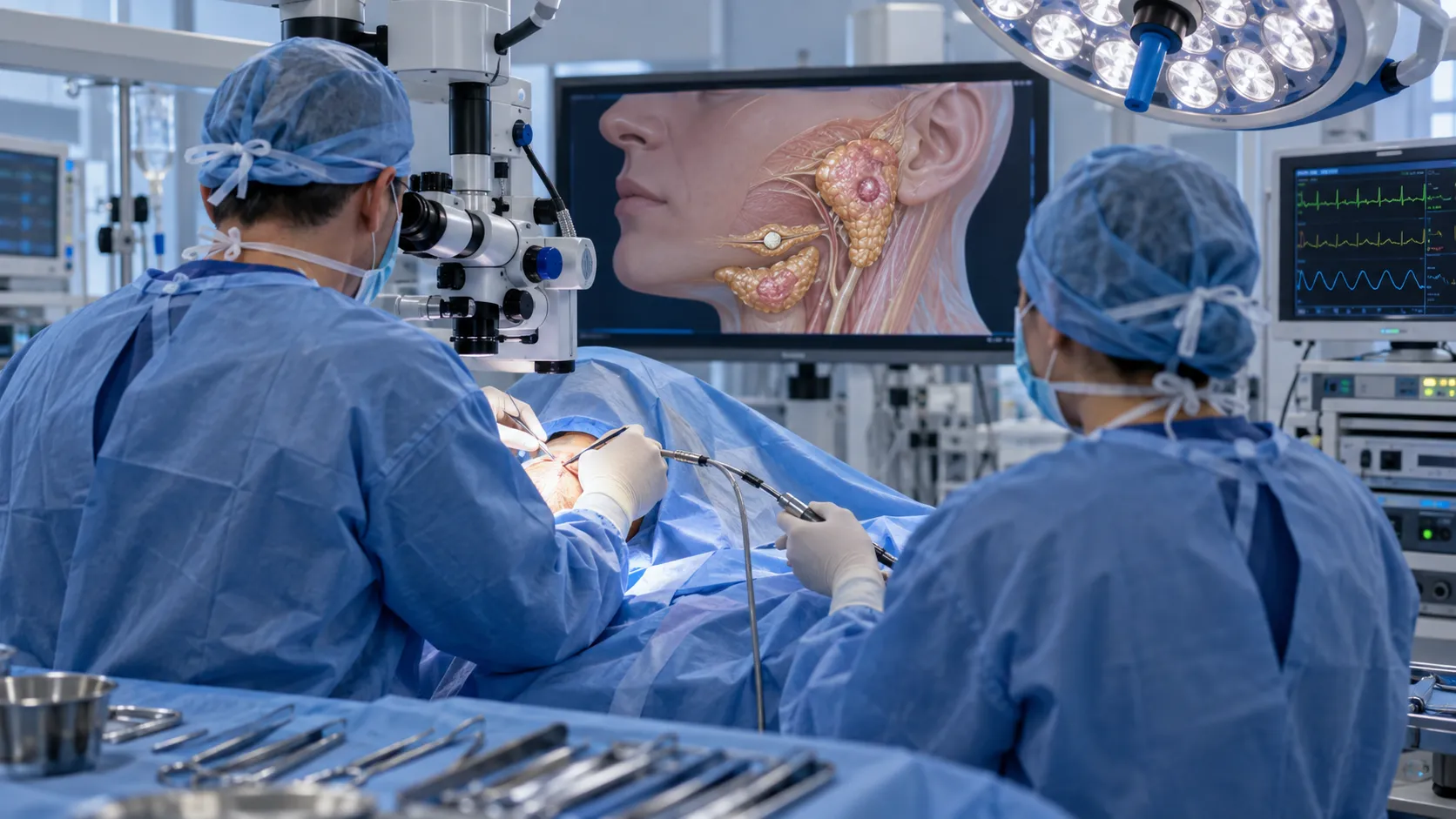
Complete gland removal may be recommended for deeply located stones, repeated severe infection, extensive gland damage or a tumour.
Risks Depend on the Gland Involved
Submandibular gland surgery takes place close to nerves involved in lower-lip movement, tongue sensation and tongue movement. Parotid surgery involves branches of the facial nerve. Procedures in the floor of the mouth require attention to the tongue and salivary ducts.
Patients should ask about:
- The exact gland affected
- Whether the gland can be preserved
- The location of the stone or tumour
- Nerves close to the planned operation
- Expected effect on saliva production
- The need for tissue examination
Removing one diseased major salivary gland does not usually cause severe dry mouth because other glands continue producing saliva. However, individual circumstances differ.
Finding Appropriate Care in Nashik
Hot weather and inadequate fluid intake may make salivary secretions thicker, although dehydration is not the only reason stones develop. People in Nashik who experience meal-related swelling should increase hydration and arrange an ENT assessment instead of repeatedly treating the problem as a dental infection.
Omkar ENT Hospital evaluates salivary gland obstruction, inflammation and tumours. Surgical recommendations are based on the location of disease and the possibility of preserving normal gland and nerve function.
Persistent salivary swelling requires a specific diagnosis. Once the cause is known, treatment can be directed toward relieving obstruction, controlling infection or removing abnormal tissue with an appropriately planned procedure.
Keywords