
A hearing aid can make speech easier to access, but successful home communication also depends on fitting accuracy, room layout, family habits and daily use. You will learn how to prepare your home, handle common conversations, adjust listening settings, build wearing time and recognise when professional help is needed.
Key takeaways
- Complete diagnostic testing before choosing hearing aids.
- Face the speaker and reduce competing sounds during conversations.
- Wear hearing aids regularly and report uncomfortable sound early.
- Keep devices dry and seek clinical help for persistent problems.
Start With the Right Hearing Assessment and Fitting
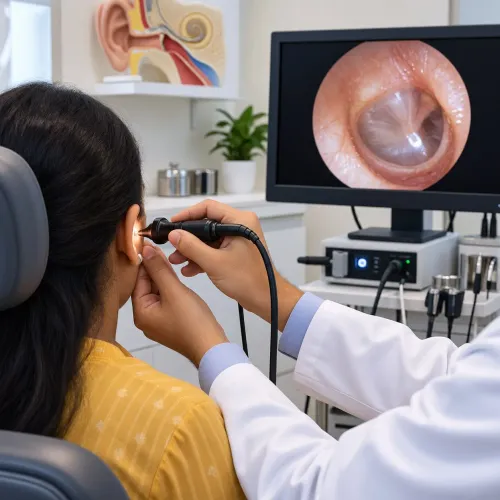
Before choosing hearing aids for communication at home in Nashik, book a diagnostic assessment rather than selecting an amplifier by sound alone. It should include your medical history, otoscopy and pure-tone audiometry. The clinician may add speech testing or tympanometry when indicated.
These checks can find earwax, a blocked canal, middle-ear fluid or another treatable problem that could be mistaken for permanent hearing loss.
Ask these questions during the consultation:
- If both ears have aidable hearing loss, would two hearing aids improve access to voices from either side and sound localisation?
- What medical, financial or ear-specific factor could change that recommendation?
- Will programming be verified with real-ear measurement or another validated electroacoustic method, rather than judged only by loudness?
- How many follow-up visits are included, and what are the arrangements for repairs, warranty, batteries or charging?
- What happens if the first fitting does not improve your main home communication problem?
| Choice | What it helps assess | When it matters |
|---|---|---|
| Two hearing aids | Sound access from both sides and localisation | Aidable loss in both ears |
| Real-ear measurement | Whether output matches measured hearing loss | Every initial fitting and adjustment |
| Speech testing or tympanometry | Speech understanding or middle-ear function | When the clinician identifies a need |
Seek urgent medical assessment for sudden hearing loss, severe dizziness, ear pain, discharge or markedly one-sided hearing loss. Do not wait for a hearing-aid trial.
Create a Conversation Setup That Lets You See and Hear Clearly
Choose a seat where the speaker is within your hearing aid’s useful microphone range, faces you directly and is not silhouetted by a bright window. Put a lamp beside or behind you so light falls on the speaker’s face without shining into your eyes.
| Situation | Room arrangement | Communication habit |
|---|---|---|
| One-to-one talk | Sit facing the speaker; turn down the television and switch off a nearby fan when practical. | Gain attention first, keep your mouth visible and speak at a normal pace. |
| Family meal | Sit with your back to a wall, facing the table rather than an open, noisy room. | Ask relatives not to speak from the kitchen or another room. |
| Traffic or appliance noise | Close windows facing heavy traffic and move away from a mixer, pressure cooker or exhaust fan. | Reduce the competing sound before asking for repetition. |
| Difficult room | Move to a smaller room with curtains, upholstered furniture and fewer hard surfaces. | Keep faces visible and avoid shouting. |
These changes matter because a hearing aid makes speech more audible but cannot remove every competing voice. For a hearing aid for family conversations in Nashik, treat the room and the speaker as part of the listening setup, not just the device.
Confirm important details instead of asking only, “Did you hear me?” Ask, “What time is the appointment?” or request the person to repeat a name, address or medicine instruction. Write it down when accuracy matters. “Did you hear me?” checks detection; repeating the detail checks understanding.
Match Hearing Aid Settings to Everyday Home Situations
Use the everyday or quiet setting for a close one-to-one conversation. For a family meal with a fan, television or kitchen appliance running, ask your clinician whether a directional microphone or noise-reduction program suits that situation.
| Situation | Setting or technique | What to remember |
|---|---|---|
| One-to-one conversation | Everyday or quiet setting | Face the speaker and keep their mouth visible. |
| Family meal | Directional microphone or noise reduction | These may improve comfort, but cannot separate every voice from competing speech. |
| Television | Lower room volume; use Bluetooth streaming if supported | Keep the screen visible for facial cues. |
| Phone call | Position the receiver or smartphone microphone as recommended | Do not cover the hearing aid; telecoil works with compatible phones or loop systems. |
| Speaker across a room | Remote microphone | Place it close to the person speaking. |
| Speech from another room | Ask the speaker to come closer | Do not compensate by sharply increasing volume. |
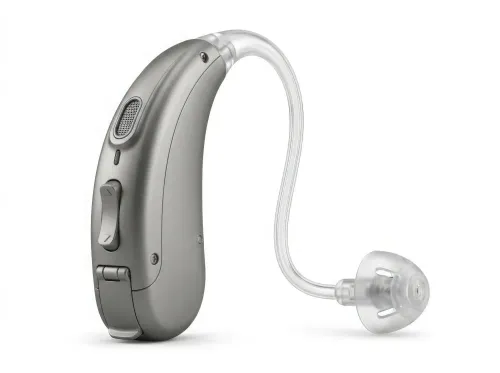
Choosing hearing devices for home use in nashik means matching features to real listening tasks, not choosing the loudest program. Bluetooth can stream a phone or television directly to compatible aids, while a telecoil requires a compatible phone or loop system.
Use the volume control when your listening need genuinely changes. If sound suddenly becomes weak, check for earwax or blocked microphone and receiver openings instead of raising volume.
Judge success by understanding sentences with less effort, not by louder sound. Directional processing and noise reduction cannot reliably separate one family member’s voice from another person speaking nearby. Face-to-face positioning and reduced background noise still matter.
Build Wearing Time and Fix Uncomfortable Sound Early
Begin with calm, familiar conversations, then add television, family meals and busier rooms as listening becomes easier. Follow the wearing schedule given for your model and clinician; forcing a full day through discomfort can make you give up.
| Speech complaint | Possible source | What to do |
|---|---|---|
| Tinny or metallic speech | Programming or coupling | Request fine adjustment |
| Echoing own voice | Earmould or dome fit | Ask about a different coupling |
| Too loud or unclear | Programming or hearing-loss mismatch | Request fitting review |
| Muffled or weak sound | Moisture, wax, or blocked microphone or receiver opening | Arrange inspection and cleaning |
Take a short, quiet break when listening fatigue reduces your concentration. Record the room, speaker, hearing-aid setting and activity that caused trouble; that detail helps the clinician reproduce the problem.
If discomfort persists, do not abandon the aids after one session. Ask whether the fitting was verified against your measured hearing loss using real-ear measurement or another validated electroacoustic method, and whether fine adjustment, a different earmould or dome, or counselling is needed. More than one programming visit is common during adaptation.
For hearing aids for everyday communication in Nashik, Omkar ENT Hospital - 08042755812 can connect a home listening complaint with hearing assessment, fitting review and follow-up planning. Aim for easier access to speech and less effort, not perfect hearing in every noisy room.
Related service
Best hearings solutions with complete hearing satisfaction ₹25000 What are Hearing Aids? Hearing aids are small electronic devices designed to amplify and modulate sound to help individuals with hearing loss hear... View service → |
Protect the Device and Know When Home Care Is Not Enough
Reliable hearing devices for home use in Nashik need a consistent routine, not occasional cleaning. Follow the model manual and your clinician’s instructions because battery size, charging method, cleaning tools and replaceable parts differ.
For hearing aids for communication at home in Nashik, record cleaning, charging, repairs and difficult listening situations so follow-up addresses actual problems.
- Replace a disposable battery only with the specified size. Put a rechargeable aid on its designated charger; never guess from appearance.
- Keep the device away from water, bathroom steam and heavy sweat. Store it dry in a secure case away from children and pets.
- Remove visible debris only as the manual permits. Never use a hair dryer, radiator or another heat source.
- Never push cotton buds or objects into the ear. Earwax can suddenly reduce hearing or make an aid sound poor.
| Symptom or situation | Check at home | Arrange professional help when |
|---|---|---|
| Weak, distorted or intermittent sound | Check the battery or charge, then inspect microphone and receiver openings for visible blockage | The problem continues after these checks |
| Suspected earwax blockage | Do not attempt removal with an object | An ENT clinician should assess blockage, pain, discharge or persistent muffling |
| Wet or sweaty device | Move it away from moisture and follow the model’s drying instructions | Sound remains abnormal or the device will not operate |
| Repeated debris or faults | Follow the approved cleaning routine | Arrange professional cleaning or repair instead of opening the aid yourself |
Frequently asked questions
What hearing assessment should you complete before choosing hearing aids?
Request a medical history review, otoscopy and pure-tone audiometry. Speech testing or tympanometry may be added when indicated.
How can you make family conversations easier at home?
Sit where you can see the speaker’s face, improve lighting, reduce television or kitchen noise, and ask family members to speak clearly without shouting.
How should you adjust hearing aids for different home situations?
Use suitable programs or volume settings for quiet conversation, television and noisy rooms, then ask your hearing clinician to fine-tune settings that remain unclear or uncomfortable.
What should you do if hearing aids sound uncomfortable?
Build wearing time gradually and contact your clinician if sounds remain harsh, speech stays unclear, the device causes pain or feedback continues.
When is home care not enough for a hearing aid problem?
Seek professional help when cleaning, charging or replacing the battery does not resolve poor sound, repeated feedback, physical discomfort or sudden hearing changes.