Ear drainage that lasts for weeks or returns after treatment can signal a perforated eardrum, chronic middle-ear infection, cholesteatoma, mastoid disease or an ear-canal problem. By the end, you will know which warning signs need urgent care, how specialists investigate the cause, and when micro ear surgery is more appropriate than repeated drops or cleaning.
Key takeaways
- Drainage lasting two weeks needs specialist assessment.
- Seek urgent care for severe pain, swelling, fever, or sudden hearing loss.
- Do not put drops, oil, or cotton buds into a perforated eardrum.
- Surgery depends on the cause, such as a perforation, infection, or cholesteatoma.
What ongoing ear drainage means and when it needs urgent care
A short-lived ear infection usually improves within a few days of appropriate treatment, and drainage stops rather than repeatedly returning. Discharge lasting two weeks, recurring after treatment, or passing through a perforated eardrum points to a persistent middle-ear problem that needs specialist assessment.
Ear discharge problems in Nashik do not identify one diagnosis: causes include otitis externa, an infected ventilation tube, chronic suppurative otitis media, and cholesteatoma.
Seek urgent medical care if drainage occurs with:
- Severe or worsening ear pain
- High fever
- Swelling or tenderness behind the ear
- Marked dizziness or sudden hearing loss
- Facial weakness
- Severe headache, confusion, or another new neurological symptom
- Foul-smelling discharge with rapidly worsening symptoms
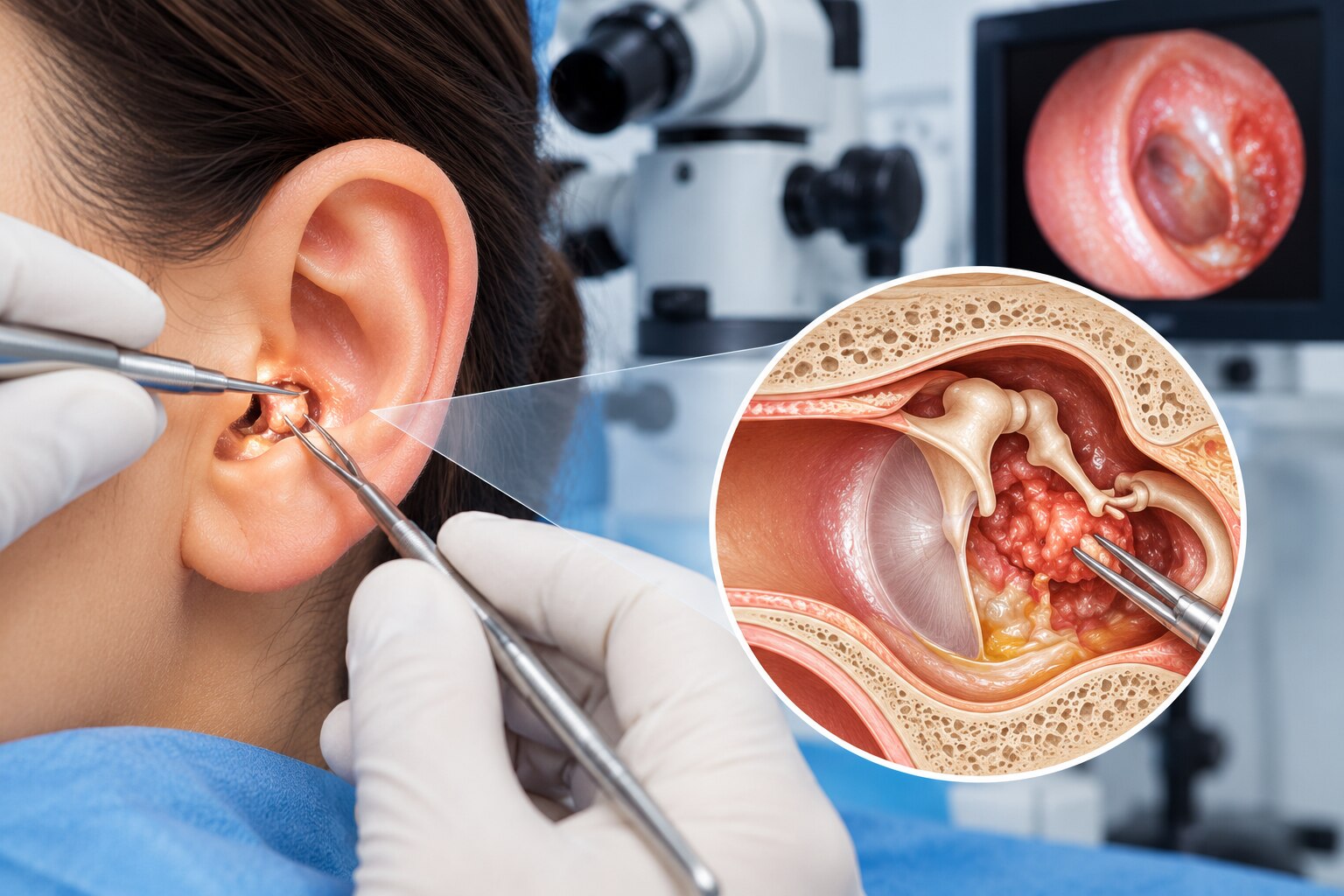
These signs can indicate mastoid infection or another complication. Cholesteatoma deserves particular attention because trapped skin can erode the small hearing bones, inner ear, facial nerve, or nearby bone. Antibiotics can reduce the infection but cannot remove the trapped skin.
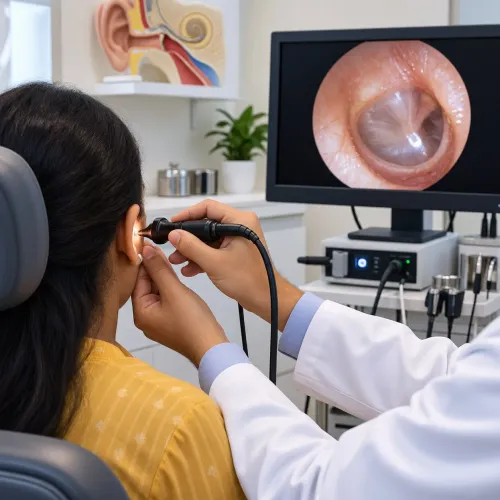
For less urgent drainage, an ENT specialist should inspect the ear canal and eardrum with otoscopy or oto-microscopy, clean away discharge when needed, and arrange hearing tests. A culture helps in selected treatment-resistant cases, but it cannot decide whether surgery is necessary.
If you are searching for ongoing ear drainage needing micro ear surgery in Nashik, arrange an examination rather than repeatedly using leftover drops or antibiotics.
Which conditions cause persistent discharge and how specialists find them
Before recommending surgery, an ENT specialist must identify where the drainage starts and what has been damaged. A chronic ear drainage specialist in Nashik will inspect the ear canal and eardrum with otoscopy or oto-microscopy, recording perforation size, discharge, granulation tissue, retraction pockets and any visible cholesteatoma.
The causes differ, so “ear discharge problems in Nashik” does not point to one operation:
- A perforated eardrum with chronic suppurative otitis media can let infected material drain repeatedly.
- Otitis externa affects the ear canal skin and may improve with cleaning and topical treatment.
- A blocked or infected ventilation tube can cause drainage around the tube.
- Cholesteatoma can erode bone and require more urgent surgical planning.
- Infection trapped in mastoid air cells can change the scope of treatment.
The assessment usually includes:
- Suction cleaning under magnification, which reveals the eardrum and removes debris hiding disease.
- Pure-tone audiometry and speech testing to measure hearing before treatment.
- Tympanometry when the eardrum and canal allow a reliable pressure test.
- A discharge swab for recurrent or treatment-resistant infection; culture identifies organisms but cannot decide whether surgery is necessary.
- CT of the temporal bone when cholesteatoma, mastoid disease or bone damage is suspected.
| Condition | Key examination finding | Test or decision |
|---|---|---|
| Perforation with chronic infection | Persistent opening and infected middle-ear discharge | Treat infection first; consider repair if it persists |
| Cholesteatoma | Retraction pocket, trapped skin or granulation | CT and surgical assessment |
| Otitis externa or tube problem | Canal inflammation or drainage around a tube | Local treatment or tube management first |
What to do before your ear assessment and when medicines come first
Until examined, keep the ear dry and do not push cotton buds, tissue, oil, or herbal preparations into the canal. During bathing, place cotton coated with petroleum jelly at the entrance, not deep inside; avoid swimming, and wipe only the outer ear.
Do not use leftover ear drops, because some medicines are unsafe when the eardrum is perforated.
- Arrange an ENT assessment instead of repeatedly treating the discharge as a routine infection. Tell the clinician how long it has lasted, whether it smells, and which drops or tablets you have already used.
- Keep any prescribed drops at the stated dose and duration. Ask whether the product is safe with a perforated eardrum, and stop self-treatment if pain, rash, dizziness, or worsening drainage develops.
- Seek prompt care for facial weakness, severe pain, fever, swelling behind the ear, marked vertigo, severe headache, confusion, or sudden hearing loss.
- Do not delay assessment while waiting for a culture. A swab can guide treatment in recurrent or resistant cases, but it cannot decide whether surgery is necessary.
Medicines come first when examination shows otitis externa, an infected ventilation tube, or a middle-ear infection without cholesteatoma or another structural danger. The clinician may clean the ear and prescribe suitable topical treatment, with oral antibiotics when infection has spread or caused systemic illness.
Micro ear surgery for ear discharge becomes a consideration when drainage persists despite appropriate treatment, the perforation fails to heal, or cholesteatoma threatens the ear. If you are researching ongoing ear drainage needing micro ear surgery in Nashik, ask whether the immediate goal is infection control before any operation.
When micro ear surgery is appropriate and which operation you may need
A perforated eardrum is not automatically a reason for major surgery. The decision depends on whether drainage comes through the perforation, whether infection has reached the mastoid, whether cholesteatoma is present, and whether the hearing bones still transmit sound.
| Operation | What it does | Findings that make it useful |
|---|---|---|
| Tympanoplasty | Repairs the eardrum and, when needed, the middle-ear lining | A persistent perforation with recurrent discharge after infection is controlled, especially when the mastoid is healthy |
| Mastoidectomy | Removes infected or abnormal mastoid air cells | Mastoid disease, trapped infected tissue, or cholesteatoma requiring disease clearance |
| Tympanomastoid surgery | Combines tympanoplasty with mastoidectomy | A perforation plus mastoid infection, extensive chronic disease, or cholesteatoma |
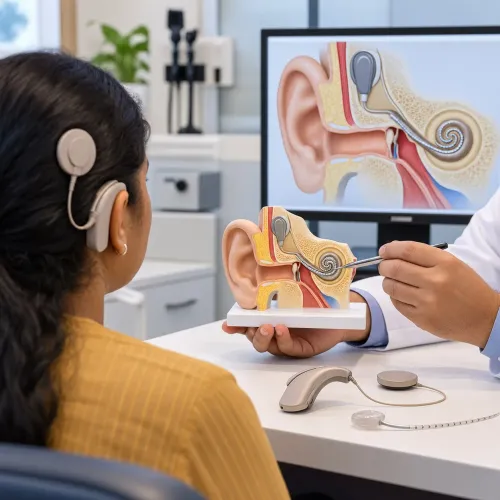
| Ossicular reconstruction | Repairs or replaces damaged malleus, incus, or stapes bones | Conductive hearing loss caused by erosion, fixation, or scarring of the ossicles |
Micro ear surgery for ear discharge may therefore involve one procedure or a planned combination. A cholesteatoma usually makes disease removal the priority; hearing reconstruction may occur during the same operation or later, because a dry, safe ear and better hearing are separate goals.
Ask an ear surgeon to name the exact operation and identify the finding that justifies it. A chronic ear drainage specialist in Nashik should also explain whether staged treatment is likely.
For ear infection surgery in Nashik, Omkar ENT Hospital - 08042755812 can document the proposed procedure and its hearing and drainage goals before you decide.
Related service
Stichless ear operations ₹50000 What is Micro Ear Surgery? Ear surgery, also known as otologic surgery, refers to surgeries performed to correct conditions that affect the structure... View service → |
What surgery is meant to achieve and what to ask before agreeing
Agree only after the surgeon states the main target in plain language: a safe, dry ear; closure of the eardrum perforation; better hearing; or a combination. Removing infection and rebuilding hearing are separate goals, so drainage can stop even when hearing stays unchanged.
| Surgical goal | Hearing expectation | Staging and follow-up |
|---|---|---|
| Safe, dry ear | Hearing may remain unchanged | Infection or cholesteatoma removal comes first; regular examinations check for recurrence |
| Close the perforation | Hearing may improve if the middle ear and ossicles work well | Tympanoplasty needs healing checks and water precautions |
| Rebuild hearing | Improvement depends on the ossicles, inner ear and reconstruction | Ossicular reconstruction may be done later, with repeat hearing tests |
| Staged treatment | No promise of immediate improvement | The surgeon may treat disease first, then plan hearing reconstruction after healing |
Before agreeing to ear infection surgery in nashik, ask:
- Which operation is proposed: tympanoplasty, mastoidectomy, tympanomastoid surgery or ossicular reconstruction?
- Is cholesteatoma present, and will the operation remove all trapped skin?
- What result is realistic for drainage, the perforation and hearing separately?
- Could the procedure need a second stage, and what would trigger it?
- How many follow-up visits and hearing tests are planned, and who reviews the ear after surgery?
- Which symptoms require urgent contact, such as fever, increasing pain, facial weakness, severe dizziness or sudden hearing decline?
For ongoing ear drainage needing micro ear surgery in nashik, request procedure-specific aftercare rather than a promise of a quick cure. Small blood-stained or watery discharge can occur after surgery; worsening symptoms need prompt review.
Frequently asked questions
When does ongoing ear drainage need urgent care?
Seek urgent care for severe pain, swelling behind the ear, fever, dizziness, facial weakness, or sudden hearing loss. Drainage lasting two weeks or returning after treatment also needs specialist assessment.
What conditions can cause persistent ear discharge?
Common causes include chronic middle-ear infection, a perforated eardrum, an infected mastoid cavity, and cholesteatoma. An ear specialist examines the ear and may order hearing tests or imaging.
What should you do before an ear drainage assessment?
Keep the ear dry, avoid cotton buds and oil, and do not use ear drops unless prescribed. Take details of previous medicines, discharge duration, pain, hearing changes, and prior ear surgery.
When is micro ear surgery used for ear discharge?
Surgery is considered when infection persists, a perforation does not heal, damaged middle-ear structures need repair, or cholesteatoma must be removed. Medicines come first when they can control the cause safely.
What should you ask before agreeing to ear infection surgery?
Ask for the exact diagnosis, proposed operation, treatment alternatives, hearing goal, risks, recovery time, follow-up schedule, and what happens if drainage returns.