
ENT Doctor In Nashik
An allergy (allergic rhinitis) that occurs in a particular season is more commonly known as hay fever. About 8 percent of Americans experience it, reports the American Academy of Allergy, Asthma & Immunology.
Hay fever occurs when your immune system overreacts to an outdoor allergen, such as pollen. An allergen is something that triggers an allergic response. The most common allergens are pollens from wind-pollenated plants, such as trees, grasses, and weeds. The pollens from insect-pollinated plants are too heavy to remain airborne for long, and they’re less likely to trigger an allergic reaction.
Seasonal allergies are less common during the winter, but it’s possible to experience allergic rhinitis year-round. Different plants emit their respective pollens at different times.
Symptoms of seasonal allergies
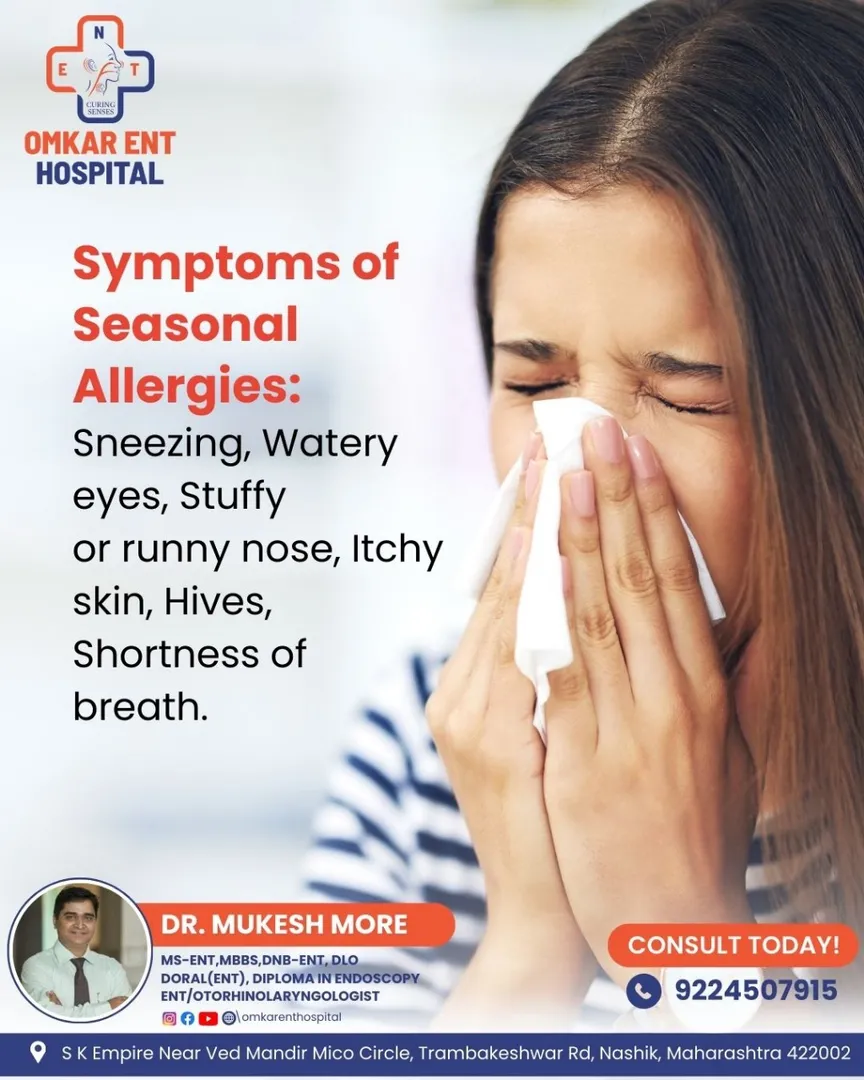
Symptoms of seasonal allergies range from mild to severe. The most common include:
sneezing
runny or stuffy nose
watery and itchy eyes
itchy sinuses, throat, or ear canals
ear congestion
postnasal drainage
Less common symptoms include:
headache
shortness of breath
wheezing
coughing
Many people with hay fever also have asthma. If you have both hay fever and asthma, your seasonal allergens may trigger an asthma attack.
Subscribe
Explore more in
Allergies
We include products we think are useful for our readers. If you buy through links on this page, we may earn a small commission. Here’s our process
Seasonal Allergies: Symptoms, Causes, and Treatment
Medically reviewed by Avi Varma, MD, MPH, AAHIVS, FAAFP — Written by Michael Kerr — Updated on March 4, 2024
Symptoms
Causes
Diagnosis
Treatment
Takeaway
Overview
An allergy (allergic rhinitis) that occurs in a particular season is more commonly known as hay fever. About 8 percent of Americans experience it, reports the American Academy of Allergy, Asthma & Immunology.
Hay fever occurs when your immune system overreacts to an outdoor allergen, such as pollen. An allergen is something that triggers an allergic response. The most common allergens are pollens from wind-pollenated plants, such as trees, grasses, and weeds. The pollens from insect-pollinated plants are too heavy to remain airborne for long, and they’re less likely to trigger an allergic reaction.
Hay fever comes by its name from hay-cutting season. Historically, this activity occurred in the summer months, around the same time many people experienced symptoms.
Seasonal allergies are less common during the winter, but it’s possible to experience allergic rhinitis year-round. Different plants emit their respective pollens at different times of year. Depending on your allergy triggers and where you live, you may experience hay fever in more than one season. You may also react to indoor allergens, such as mold or pet dander.
Symptoms of seasonal allergies
Symptoms of seasonal allergies range from mild to severe. The most common include:
sneezing
runny or stuffy nose
watery and itchy eyes
itchy sinuses, throat, or ear canals
ear congestion
postnasal drainage
Less common symptoms include:
headache
shortness of breath
wheezing
coughing
Many people with hay fever also have asthma. If you have both hay fever and asthma, your seasonal allergens may trigger an asthma attack.
Causes of seasonal allergies
.
Common triggers of hay fever vary from one season to another.
Spring
Trees are responsible for most springtime seasonal allergies. Birch is one of the most common offenders in northern latitudes, where many people with hay fever react to its pollen. Other allergenic trees in North America include cedar, alder, horse chestnut, willow, and poplar.
Summer
Hay fever gets its name from hay-cutting season, which is traditionally in the summer months. But the real culprits of summertime seasonal allergies are grasses, such as ryegrass and timothy grass, as well as certain weeds. According to the Asthma and Allergy Foundation of America, grasses are the most common trigger for people with hay fever.
Fall
Autumn is ragweed season. The genus name for ragweed is Ambrosia, and it includes more than 40 species worldwide. Most of them grow in temperate regions of North and South America. They’re invasive plants that are difficult to control. Their pollen is a very common allergen, and the symptoms of ragweed allergy can be especially severe.
Other plants that drop their pollen in the fall include nettles, mugworts, sorrels, fat hens, and plantains.
Winter
By winter, most outdoor allergens lie dormant. As a result, cold weather brings relief to many people with hay fever. But it also means that more folks are spending time indoors. If you’re prone to seasonal allergies, you may also react to indoor allergens, such as mold, pet dander, dust mites, or cockroaches.
#omkarenthospital #enthospital #entclinic #nashikenthospital #drmukeshmore #entspecialist #entnashik #nashikentdoctor #nashikenthospital #drmukeshmoreent
Keywords