


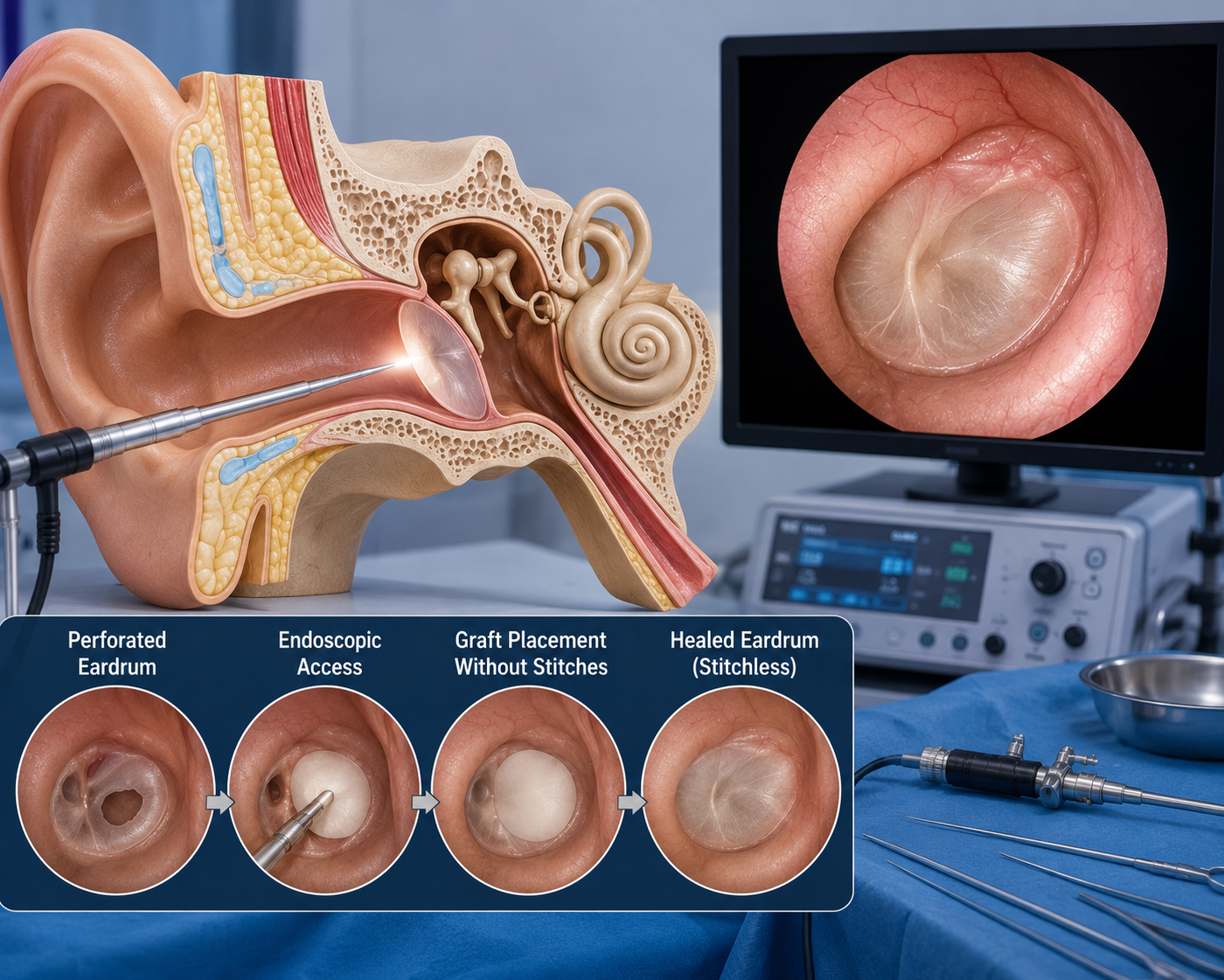
A damaged eardrum can affect hearing, increase the risk of repeated ear infections, and interfere with everyday activities. Fortunately, advances in ENT surgery have made treatment more comfortable and less invasive for suitable patients. One such advancement is the Tympanoplasty Stitchless Ear Operation, a modern technique designed to repair perforated eardrums while promoting faster recovery and excellent functional outcomes.
Understanding when this procedure is recommended can help patients seek timely care and protect their hearing for the future.
What Is Tympanoplasty?
Tympanoplasty is a surgical procedure performed to repair a hole or tear in the eardrum, medically known as the tympanic membrane. A damaged eardrum may result from:
- Chronic ear infections
- Trauma to the ear
- Sudden pressure changes
- Injury caused by inserting objects into the ear
- Previous untreated ear disease
The goal of surgery is to restore the integrity of the eardrum, reduce infections, and improve hearing.
What Makes a Stitchless Ear Operation Different?
Traditional tympanoplasty often involves external incisions depending on the patient's condition. In carefully selected cases, modern stitchless techniques use minimally invasive approaches that reduce external cuts and eliminate the need for visible stitches.
Potential advantages may include:
- Smaller surgical access
- Minimal tissue disruption
- Reduced post-operative discomfort
- Faster healing
- Better cosmetic outcomes
- Quicker return to normal daily activities
The suitability of this technique depends on the size, location, and cause of the eardrum perforation.
Symptoms That May Indicate the Need for Evaluation
A damaged eardrum does not always cause severe pain. Many patients continue living with symptoms for months or even years without realizing that treatment is available.
Common warning signs include:
- Recurrent ear discharge
- Hearing difficulty
- Ear fullness
- Whistling sounds while sneezing
- Ear infections that repeatedly return
- Water entering the ear easily during bathing
Persistent symptoms should be assessed by an ENT specialist rather than managed with repeated self-medication.
How Is the Diagnosis Made?
Before recommending surgery, the ENT surgeon performs a detailed examination to understand the condition of the ear.
Evaluation may include:
- Otoscopic examination
- Microscopic ear assessment
- Hearing tests
- Examination of the middle ear
- Assessment for infection or inflammation
These investigations help determine whether surgery is necessary and which technique will provide the best outcome.
Who May Benefit from Stitchless Tympanoplasty?
The procedure may be suitable for patients who have:
- A persistent eardrum perforation
- Recurrent middle ear infections
- Conductive hearing loss caused by eardrum damage
- A dry ear ready for reconstruction
- No major active infection at the time of surgery
Not every patient is a candidate, making individualized assessment essential.
Recovery After Surgery
Recovery varies depending on the patient's overall health and the complexity of the repair. Most people receive detailed post-operative instructions that may include:
- Keeping the ear dry
- Avoiding forceful nose blowing
- Preventing water from entering the ear
- Attending scheduled follow-up visits
- Taking prescribed medications as advised
Following these instructions helps support proper healing and improves the chances of successful eardrum repair.
Can Hearing Improve After Surgery?
One of the primary goals of tympanoplasty is to improve hearing by restoring the normal function of the eardrum. The extent of hearing improvement depends on several factors, including:
- Size of the perforation
- Condition of the middle ear
- Health of the hearing bones
- Duration of ear disease
- Presence of infection before surgery
An experienced ENT surgeon can explain realistic expectations based on the individual's condition.
Patients across Nashik, Maharashtra, increasingly seek minimally invasive ENT procedures that combine safety with faster recovery. Omkar ENT Hospital evaluates each patient carefully before recommending a Tympanoplasty Stitchless Ear Operation, ensuring the treatment plan is tailored to the specific ear condition rather than applying a one-size-fits-all approach. Early diagnosis and timely surgical care can help preserve hearing, reduce recurring infections, and improve overall ear health for both adults and children.