The right first step depends on whether your snoring suggests obstructive sleep apnoea, a correctable nose or throat problem, or uncomplicated occasional noise. By the end, you will know when to seek an ENT assessment, when to prioritise objective sleep testing, which test fits your situation, and what questions to ask before arranging care in Nashik.
Key takeaways
- Choose a sleep study when snoring includes breathing pauses, gasping, or choking.
- A clinical assessment checks your nose, throat, jaw, sleep pattern, and health risks.
- Home tests suit some adults; polysomnography gives a more detailed evaluation.
- Test results help match treatment to airway blockage and sleep apnoea severity.
Choose a sleep study first when snoring comes with warning signs
Loudness alone does not decide “snoring treatment or sleep study which should you choose in Nashik”. Choose objective testing first when snoring is habitual and someone notices breathing pauses, gasping, or choking. A sleep study matters because snoring by itself does not diagnose obstructive sleep apnoea (OSA).
| Situation | Better next step | Why |
|---|---|---|
| Occasional snoring without pauses or daytime symptoms | Clinical assessment and routine measures | OSA risk is lower |
| Snoring with breathing pauses, choking, or severe sleepiness | Sleep study before treatment | OSA needs objective confirmation |
| Negative, technically inadequate, or inconclusive home test | Overnight polysomnography (PSG) | A flawed home result does not rule out OSA |
Arrange a sleep study for snoring in Nashik promptly if you have:
- Excessive daytime sleepiness, dozing while driving, or difficulty staying awake
- Morning headaches or sleep that leaves you unrefreshed
- Blood pressure that remains high despite prescribed medicines
- Obesity, regular alcohol use, or sedative use alongside loud snoring
Ask whether the proposed test is a home sleep apnoea test (HSAT) or laboratory PSG, and whether a qualified clinician reviews the data. PSG is the safer next step after an inconclusive HSAT or when other medical problems make home testing unreliable. Do not treat a negative home test as proof that OSA is absent.
What happens during a clinical snoring assessment
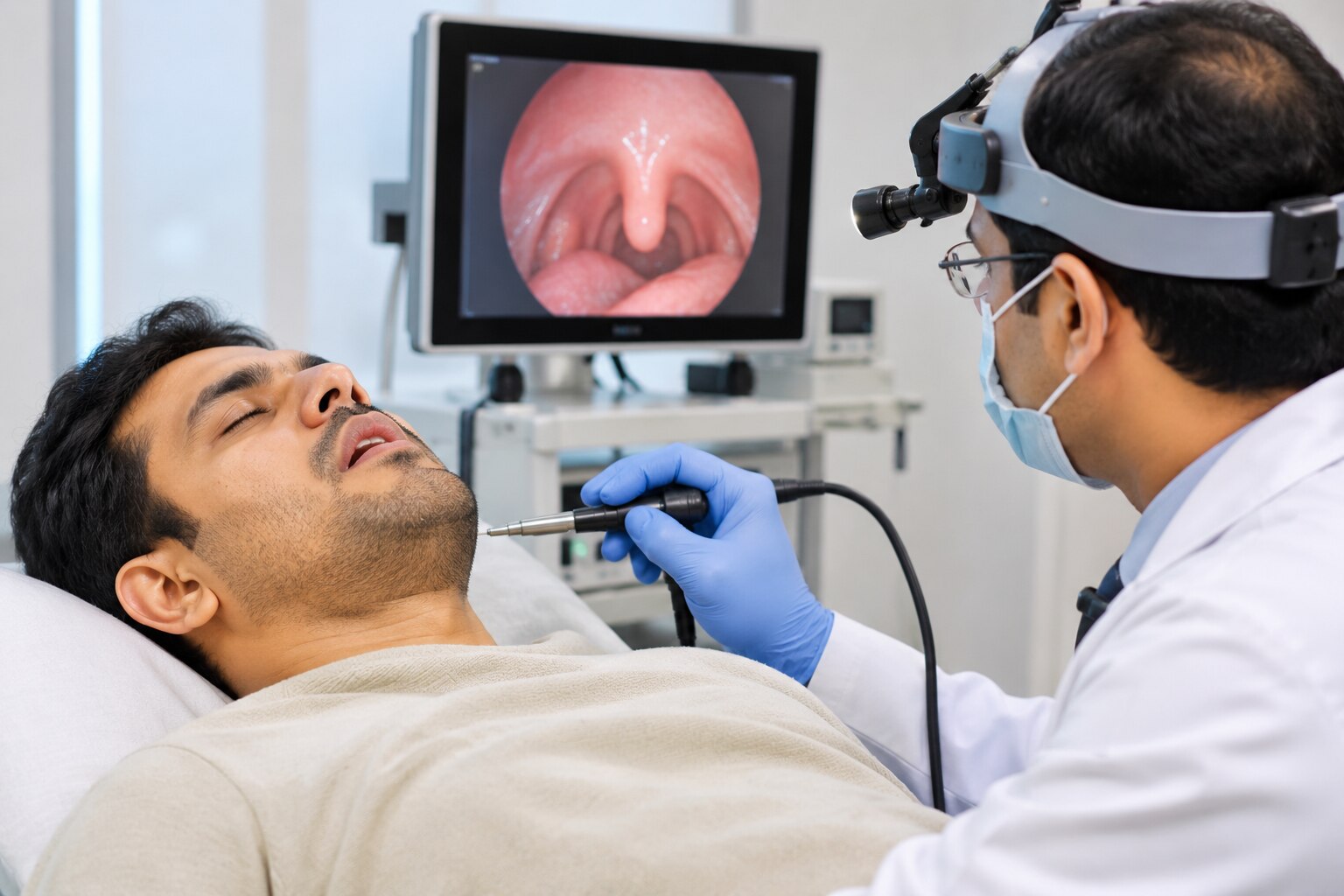
A clinical assessment decides whether snoring looks uncomplicated or signals airway obstruction that needs objective testing. A snoring assessment in Nashik should cover your sleep symptoms, health risks, airway anatomy, and reversible triggers before anyone recommends treatment.
1. The clinician will ask about witnessed breathing pauses, gasping or choking, unrefreshing sleep, morning headaches, daytime sleepiness, difficult-to-control blood pressure, weight changes, alcohol near bedtime, and sedative medicines. Your sleeping position and symptom frequency also matter; loudness alone does not diagnose obstructive sleep apnoea.
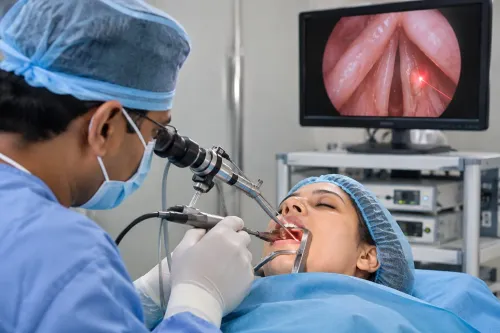
2. The examination includes your nose, throat, jaw, tongue, tonsils, palate, neck, and nasal airflow. The snoring doctor in Nashik may look for a deviated septum, allergic rhinitis, enlarged tonsils, nasal polyps, a crowded throat, or obesity.
A blocked nose can worsen snoring, but treating it does not reliably remove sleep apnoea caused by throat collapse.
3. The clinician then matches findings to the next step. Occasional snoring without breathing pauses or daytime symptoms may justify measures such as side-sleeping, reducing evening alcohol, managing nasal disease, or reviewing sedatives. Suspected apnoea, significant sleepiness, or related health problems calls for a sleep study before choosing treatment.
4. Ask whether the recommended test is a home sleep apnoea test or overnight polysomnography, who reviews the recorded data, and what happens after an inconclusive home result. A negative or technically inadequate home test does not reliably exclude apnoea and should be followed by laboratory polysomnography.
Home sleep apnea test or laboratory polysomnography
A home sleep apnoea test (HSAT) records breathing-related signals while you sleep at home. An attended laboratory polysomnography (PSG) records sleep itself and several body signals under overnight supervision.
| Option | What it measures | When it fits |
|---|---|---|
| HSAT | Airflow, breathing effort, oxygen level and pulse; it does not reliably measure sleep stages | An uncomplicated adult with a high probability of moderate-to-severe obstructive sleep apnoea |
| Laboratory PSG | Brain waves, eye and muscle movements, heart rhythm, airflow, breathing effort, oxygen and body position | Unclear cases, medical risk, or suspected sleep disorders beyond obstructive sleep apnoea |
A technically inadequate, negative or inconclusive HSAT does not prove that sleep apnoea is absent. Arrange PSG instead, because a home device can miss breathing events when it overestimates your sleep time or fails to capture the relevant signal.
Choose an attended overnight PSG when you have:
- Significant heart or lung disease
- Neuromuscular weakness
- Chronic opioid use
- A previous stroke
- Severe insomnia
- Possible central sleep apnoea, parasomnia or narcolepsy
For a sleep study for snoring in nashik, ask whether the appointment is for HSAT or PSG, who reviews the recorded data, and what happens after an inconclusive home test. Confirm that a qualified clinician connects the result to treatment rather than sending you a number without a plan.
How test results change the treatment decision
A clinical assessment without obstructive sleep apnoea (OSA) usually leads to reversible snoring treatment, not CPAP or immediate surgery. The choice between snoring treatment or a sleep study—which should you choose in Nashik—depends on symptoms, test findings and airway anatomy, not snoring volume alone.
- If the assessment finds nasal blockage, allergic rhinitis, enlarged tonsils, alcohol near bedtime, sedative use or back-sleeping, treat that contributor first. Nasal treatment can improve breathing but will not reliably cure OSA caused by throat collapse.
- If OSA is confirmed, continuous positive airway pressure (CPAP or APAP) is the standard effective treatment. Weight management, limiting alcohol, side-sleeping and treating nasal disease can support it.
- A custom mandibular advancement device suits selected adults with mild to moderate OSA, or people who cannot tolerate CPAP. A sleep clinician and dentist should assess fit, teeth and jaw health.
- If a home sleep apnoea test is negative, technically inadequate or inconclusive despite strong symptoms, arrange laboratory polysomnography. Do not treat that result as proof that OSA is absent.
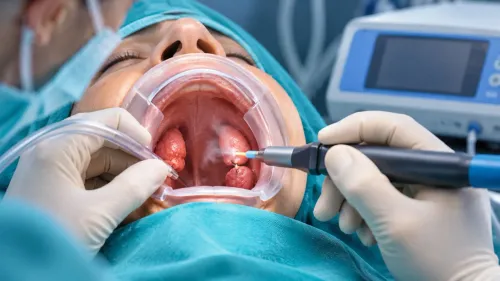
Surgery is appropriate when an examination identifies a correctable obstruction, such as very large tonsils, adenoids or a structural nasal problem, especially when medication and CPAP are unsuitable or unsuccessful. Palate or tongue-base surgery requires careful selection because it may not eliminate OSA.
A snoring doctor in Nashik should review the sleep-study severity, airway examination and treatment goals before recommending it. Children need paediatric assessment; enlarged tonsils or adenoids can require a different surgical pathway.
Questions to ask when arranging care in Nashik
Ask each provider the same questions, because “sleep study” can mean a home sleep apnoea test or overnight polysomnography (PSG). Compare who examines you, who interprets the data, and what happens if the first test does not answer the question.
| Option | What you receive | Confirm before booking |
|---|---|---|
| Clinical snoring assessment in Nashik | ENT and airway examination, symptom review, and treatment or testing plan | Ask whether nasal blockage, tonsils, medicines, alcohol, weight, and witnessed pauses will be assessed |
| Sleep study for snoring in Nashik: HSAT | Home recording of breathing, oxygen, pulse, and related signals | Ask whether a qualified clinician reviews the raw or scored data and whether an inconclusive result leads to PSG |
| Overnight PSG | Laboratory monitoring of breathing, oxygen, sleep stages, heart rate, and movements | Ask who supervises the night and who interprets the complete report |
Before choosing, ask:
- Is the test suitable for your symptoms, medical conditions, and age?
- Does the facility offer both home testing and laboratory PSG, or will you be referred elsewhere?
- When will you receive the report, and will someone explain each result?
- What treatment follows a confirmed diagnosis, and who coordinates it?
A snoring doctor in Nashik should investigate reversible contributors before discussing surgery. Omkar ENT Hospital - 08042755812 is one local option to ask about ENT examination, testing pathways, and follow-up after an inconclusive home test.
Related service
Sleep with sound mind peaceful nights Snoring ₹100000 What is Snoring? Snoring is a harsh sound, a common condition characterized by the sound produced during sleep when the flow of air through the mouth... |
Frequently asked questions
When should you choose a sleep study instead of snoring treatment?
Choose objective testing first when habitual snoring comes with witnessed breathing pauses, gasping, choking, excessive daytime sleepiness, morning headaches, or high blood pressure. Snoring alone does not diagnose obstructive sleep apnoea.
What happens during a clinical snoring assessment in Nashik?
A clinician reviews your sleep symptoms, medicines, weight and medical history, then examines your nose, throat, jaw and airway. They use these findings to decide whether you need treatment, a home sleep apnea test, or laboratory polysomnography.
Is a home sleep apnea test as detailed as laboratory polysomnography?
A home sleep apnea test records selected breathing and oxygen signals in your usual sleeping environment. Laboratory polysomnography records more signals, including brain activity, eye movements, muscle activity, heart rhythm, breathing and oxygen, so it gives a broader assessment.
How do sleep study results change the treatment decision?
Results show whether obstructive sleep apnoea is present and indicate its severity. The clinician can then discuss options such as positive airway pressure, an oral appliance, weight management, positional measures, nasal treatment, or surgery when anatomy requires it.
What should you ask when arranging snoring care in Nashik?
Ask which clinician will assess you, whether a home test or laboratory study is appropriate, what signals the test records, how results are reviewed, and what follow-up treatments are available if obstructive sleep apnoea is found.
Keywords