
MUCORMYCOSIS TREATMENT IN NASHIK
Mucormycosis (previously called zygomycosis) is a rare but serious angio-invasive infection caused by a group of fungi called mucormycetes.
Spores of these ubiquitous fungi (commonly found in soil, fallen leaves, compost, animal dung and air) can be inhaled and then infect the lungs, sinuses, and extend into the brain and eyes. Less often, infection may develop when the spores enter the body through a cut or an open wound.
Mucormycosis is not a contagious disease, it cannot be spread from one person to another.
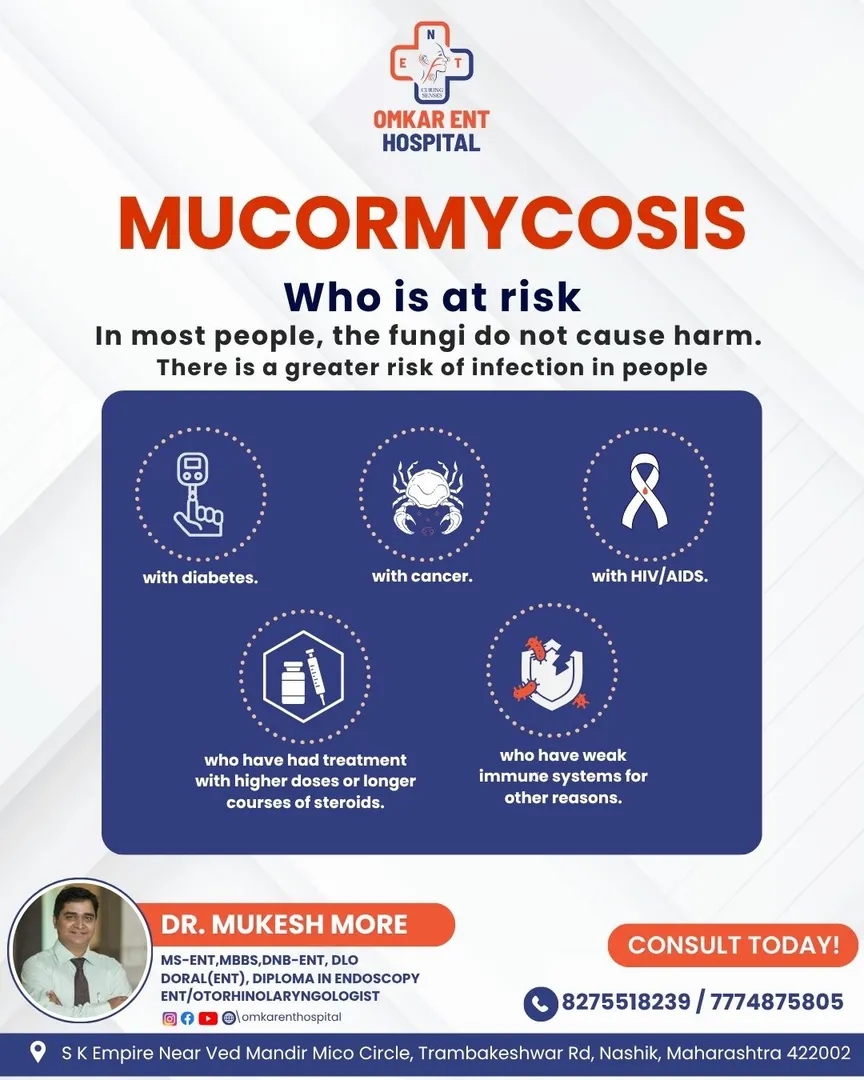
Mucormycosis mainly affects people who are immunocompromised, or patients already infected with other diseases. High risk groups include people with diabetes (especially diabetic ketoacidosis), solid organ transplantation, neutropenia (low neutrophils, a type of white blood cells), long-term systemic corticosteroid use, and iron overload (hemochromatosis). The risk is high for people living with HIV, and those using immunomodulating drugs, including the anti-fungal voriconazole in some high-risk groups.
Clinical presentation is classified according to the organ involvement. It can be rhino-orbital cerebral, pulmonary, cutaneous, gastrointestinal, or disseminated.
Mucormycosis is an aggressive, life-threatening infection requiring prompt diagnosis and early treatment. Treatment usually consists of antifungal medications and surgery.
Symptoms
The symptoms of mucormycosis depend on where in the body the fungus is growing. The most common presentation is a sinus infection (sinusitis) that is accompanied by nasal congestion, nasal discharge, and sinus pain. A fever and headache may also occur.
Treatment
Mucormycosis is difficult to treat. It may sometimes requires both intravenous antifungal therapy and surgical excision, thus necessitating a multidisciplinary team approach in a facility setting.
Liposomal amphotericin B is the drug of choice and needs to be initiated early. Other antifungals like posaconazole, or isavuconazole have also been described for treatment.
The Directorate General of Health Services (DGHS) has released detailed guidelines on managing mucormycosis in COVID-19 in India
The overall prognosis depends on several factors, including the rapidity of diagnosis and treatment, the site of infection, and the patient’s underlying conditions and degree of immunosuppression. The overall case fatality is approximately 50%, although early diagnosis and treatment lead to better outcomes.
#omkarenthospital #enthospital #entclinic #nashikenthospital #drmukeshmore #entspecialist #entnashik #nashikentdoctor #nashikenthospital #drmukeshmoreent
Mucormycosis (previously called zygomycosis) is a rare but serious angio-invasive infection caused by a group of fungi called mucormycetes.
Spores of these ubiquitous fungi (commonly found in soil, fallen leaves, compost, animal dung and air) can be inhaled and then infect the lungs, sinuses, and extend into the brain and eyes. Less often, infection may develop when the spores enter the body through a cut or an open wound.
Mucormycosis is not a contagious disease, it cannot be spread from one person to another.
Mucormycosis mainly affects people who are immunocompromised, or patients already infected with other diseases. High risk groups include people with diabetes (especially diabetic ketoacidosis), solid organ transplantation, neutropenia (low neutrophils, a type of white blood cells), long-term systemic corticosteroid use, and iron overload (hemochromatosis). The risk is high for people living with HIV, and those using immunomodulating drugs, including the anti-fungal voriconazole in some high-risk groups.
Clinical presentation is classified according to the organ involvement. It can be rhino-orbital cerebral, pulmonary, cutaneous, gastrointestinal, or disseminated.
Mucormycosis is an aggressive, life-threatening infection requiring prompt diagnosis and early treatment. Treatment usually consists of antifungal medications and surgery.
Symptoms
The symptoms of mucormycosis depend on where in the body the fungus is growing. The most common presentation is a sinus infection (sinusitis) that is accompanied by nasal congestion, nasal discharge, and sinus pain. A fever and headache may also occur.
Treatment
Mucormycosis is difficult to treat. It may sometimes requires both intravenous antifungal therapy and surgical excision, thus necessitating a multidisciplinary team approach in a facility setting.
Liposomal amphotericin B is the drug of choice and needs to be initiated early. Other antifungals like posaconazole, or isavuconazole have also been described for treatment.
The Directorate General of Health Services (DGHS) has released detailed guidelines on managing mucormycosis in COVID-19 in India
The overall prognosis depends on several factors, including the rapidity of diagnosis and treatment, the site of infection, and the patient’s underlying conditions and degree of immunosuppression. The overall case fatality is approximately 50%, although early diagnosis and treatment lead to better outcomes.
#omkarenthospital #enthospital #entclinic #nashikenthospital #drmukeshmore #entspecialist #entnashik #nashikentdoctor #nashikenthospital #drmukeshmoreent
Keywords