
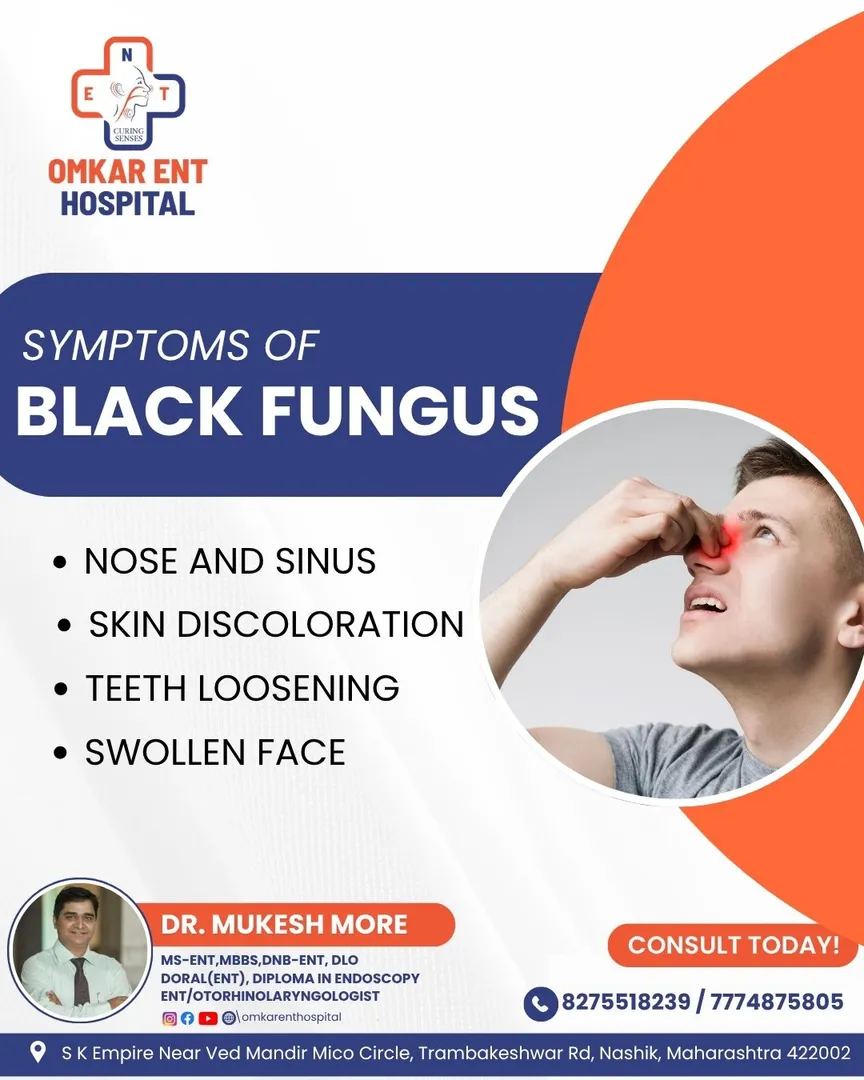
What is Black Fungus?
Black fungal infection, commonly referred to as mucormycosis, is an uncommon but harmful condition. It is caused by molds known as mucormycetes, which usually affect the sinuses, lungs, skin, and brain. Exposure to mold spores can occur through inhalation or contact with infected soil, rotting bread, or vegetables, compost piles, or other objects.
What are the symptoms of Black fungus (Mucormycosis)?
Black fungus symptoms manifest depending on where they grow, in the skin, brain or respiratory system. The following black fungus symptoms could indicate an upper or lower respiratory illness
Cough
Nasal obstruction
Fever
Headache
Chest pain
Breathing difficulty or breathlessness
Black lesions on the nasal bridge or inside the oral cavity
Mucormycosis can appear anywhere on the body as a skin infection. It may initially cause skin damage but can swiftly spread to other areas. Symptoms of black fungus on the skin include:
Blisters
Ulcers
Fever
Oedema
Redness
Darkened skin tissue
Blackened boils
Painful lesions
The black fungus can also affect the eyes. Here are some starting symptoms of black fungus in eyes:
Blurred vision
Blood clots
Double vision
Teariness
Headache
Malaise
Congestion
Blood-tinged secretions
The black fungus can affect the digestive system
Diarrhoea
Bloody stools
Nausea and vomiting
Vomiting blood
Pain abdomen
What are the causes of Black fungus (Mucormycosis)?
Exposure to black fungus molds is one of the main causes of black fungus. These microbes are found in leaves, compost piles, soil, and rotting wood, stale bread, and veggies. Inhaling airborne mold spores from an infected area can cause mucormycosis, As a result, the following areas might be affected:
Eyes
Face
Lungs
Sinuses
Skin
Central nervous system (less frequently)
Additionally, a cut or burn to the skin can expose a person to the fungus (cutaneous exposure). In these situations, the burn or wound ultimately becomes infected. Although many molds can exist in the environment naturally, not everyone who is exposed will develop a fungal infection. If the immune system is compromised, a person may be more likely to have this kind of infection. The following health conditions might increase the chances of getting the fungus:
Cancer
Burns
HIV/AIDS
People on immunosuppressants
Uncontrolled diabetes
Recent organ transplant
Stem cell transplant
Neutropenia
Chemotherapy
Long-term steroid use
#omkarenthospital #enthospital #entclinic #nashikenthospital #drmukeshmore #entspecialist #entnashik #nashikentdoctor #nashikenthospital #drmukeshmoreent
Black fungal infection, commonly referred to as mucormycosis, is an uncommon but harmful condition. It is caused by molds known as mucormycetes, which usually affect the sinuses, lungs, skin, and brain. Exposure to mold spores can occur through inhalation or contact with infected soil, rotting bread, or vegetables, compost piles, or other objects.
What are the symptoms of Black fungus (Mucormycosis)?
Black fungus symptoms manifest depending on where they grow, in the skin, brain or respiratory system. The following black fungus symptoms could indicate an upper or lower respiratory illness
Cough
Nasal obstruction
Fever
Headache
Chest pain
Breathing difficulty or breathlessness
Black lesions on the nasal bridge or inside the oral cavity
Mucormycosis can appear anywhere on the body as a skin infection. It may initially cause skin damage but can swiftly spread to other areas. Symptoms of black fungus on the skin include:
Blisters
Ulcers
Fever
Oedema
Redness
Darkened skin tissue
Blackened boils
Painful lesions
The black fungus can also affect the eyes. Here are some starting symptoms of black fungus in eyes:
Blurred vision
Blood clots
Double vision
Teariness
Headache
Malaise
Congestion
Blood-tinged secretions
The black fungus can affect the digestive system
Diarrhoea
Bloody stools
Nausea and vomiting
Vomiting blood
Pain abdomen
What are the causes of Black fungus (Mucormycosis)?
Exposure to black fungus molds is one of the main causes of black fungus. These microbes are found in leaves, compost piles, soil, and rotting wood, stale bread, and veggies. Inhaling airborne mold spores from an infected area can cause mucormycosis, As a result, the following areas might be affected:
Eyes
Face
Lungs
Sinuses
Skin
Central nervous system (less frequently)
Additionally, a cut or burn to the skin can expose a person to the fungus (cutaneous exposure). In these situations, the burn or wound ultimately becomes infected. Although many molds can exist in the environment naturally, not everyone who is exposed will develop a fungal infection. If the immune system is compromised, a person may be more likely to have this kind of infection. The following health conditions might increase the chances of getting the fungus:
Cancer
Burns
HIV/AIDS
People on immunosuppressants
Uncontrolled diabetes
Recent organ transplant
Stem cell transplant
Neutropenia
Chemotherapy
Long-term steroid use
#omkarenthospital #enthospital #entclinic #nashikenthospital #drmukeshmore #entspecialist #entnashik #nashikentdoctor #nashikenthospital #drmukeshmoreent
Keywords